(Motorsport-Total.com) – For Pirelli, the Bahrain Grand Prix in Sepang will be a challenge. Since the race in Sakhir could not take place either in the original April slot or later due to the Iran war, Bahrain has reached an agreement with the FIA, Formula 1, and Malaysia, according to which Sepang will host the race.
Read more Ferrari: Hamilton penalties must not all be painted with the same brush

This solution cannot exactly be called “last-minute,” but it still represents a significant challenge for all involved, as Formula 1 has not been a guest in Kuala Lumpur since 2017. This applies especially to Pirelli.
The Italian manufacturer always faces complex considerations when selecting the appropriate tire compounds for each track to ensure strategic variety without compromising tire durability.
“If I remember correctly, the last race in Malaysia took place in 2017,” explained Pirelli motorsport director Dario Marrafuschi shortly before the news became official. “Since 2011 [when Pirelli replaced Bridgestone as the sole supplier of Formula 1], we have been there every year, so we have a good data basis.”
“2017 was the first year with wider tires compared to the previous year. And regarding the relationship between tire size and vehicle concept, it was relatively close to what we have today,” emphasized Marrafuschi.
Time pressure: No further on-site analyses
“Therefore, I would base our decisions on the results from 2017 and make a selection oriented to that year and not to 2016, 2015, or 2014,” he explained. In 2017, Pirelli chose the compounds Medium, Soft, and Supersoft – corresponding to today’s C2, C3, and C4 within the range from C1 to C5.
Marrafuschi made it clear that Pirelli will not have time to send personnel for further analyses to Malaysia, as the compounds must be prepared as quickly as possible. The shortened schedule also means that the tires must be transported by air freight and not by ship.
Read more Formula 1 boss confirms: 2026 season would end in Europe!
The most extraordinary Grand Prix names
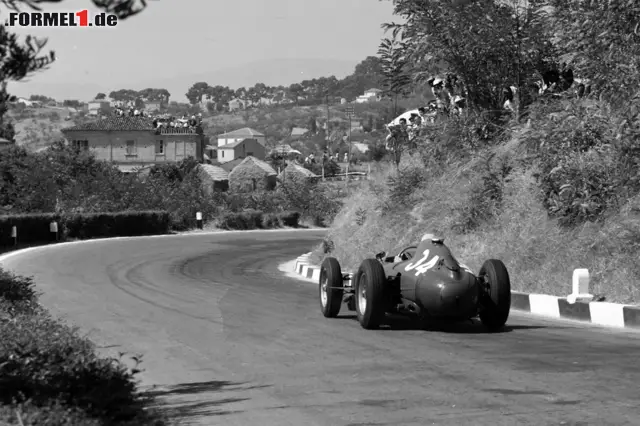
When asked about the instability of the race calendar, the Italian said: “It gives us quite a headache. We consider all scenarios but always remain flexible.”
“To meet all requirements, we may decide on several production runs and then use a spare production for the next race. So we always work with flexible scenarios. That is the key in this crazy environment.”
Cool season finale in Europe?
Marrafuschi also explained that Pirelli needs seven weeks lead time for a European race. This is due to rumors about a possible season finale in Imola if the races in Qatar and Abu Dhabi should be canceled.
This could bring additional challenges, as temperatures in Emilia-Romagna in December usually range between 0 and 8 degrees Celsius. Even Southern Europe is then not necessarily warmer than Las Vegas.
“I think we can refer to the tests in Barcelona,” said Marrafuschi and explained: “It would be similar to [the temperatures] at the Barcelona tests. So something we have already seen. Of course, it is not ideal, but definitely safe, nothing frightening.”
Read more Why Audi attaches special importance to Hülkenberg’s points
“We are not worried about that,” said the Italian.