(Motorsport-Total.com) – After months dominated by headlines about departing personnel, Red Bull had two more pleasing personnel announcements during the Formula 1 weekend at the Belgian Grand Prix.
Read more McLaren with major Update and Macarena wing in Hungary

Initially, the Milton Keynes team managed to convince Tom Hart to cancel his already planned move to Williams and instead stay with Red Bull. Hart spent many years as Max Verstappen’s performance engineer and this season worked in a broader role covering both cars.
He was actually supposed to become Alexander Albon’s race engineer at Williams, but the opportunity for promotion to race engineer has now also opened up at Red Bull – as a direct consequence of Gianpiero Lambiase’s impending departure.
Lambiase will join McLaren in 2028, but he is expected to take a period of “gardening leave” beforehand. This means that Hart will likely take on the role of race engineer at the beginning of 2027, having already filled in several times in this capacity for the remainder of this season.
On race Sunday in Spa, this news was followed by confirmation that Red Bull will also sign Gwen Lagrue from Mercedes to lead its junior program.
Lagrue is one of the most respected talent scouts in the entire Formula 1 paddock. The Frenchman spent the last decade at Mercedes – after an earlier stint at Lotus – and was responsible, among other things, for signing current Mercedes drivers George Russell and Kimi Antonelli.
After the Belgian Grand Prix, motorsport boss Toto Wolff revealed that Mercedes is currently still holding “talks about the future” with Lagrue. This also explains why Red Bull has not yet been able to announce an official start date.
Mercedes is expected to compensate for his departure through an internal restructuring; team members emphasize anyway that Mercedes employs around ten talent scouts who continuously look for young junior drivers.
Lagrue’s arrival can be seen, in a way, as a building block in Red Bull’s succession plan for Helmut Marko, who led the junior program for 25 years before stepping down at the end of last year.
The Austrian played a key role in the success stories of Sebastian Vettel and Max Verstappen and was a strong advocate behind the scenes last year for the promotion of Isack Hadjar (to Red Bull) and Arvid Lindblad (to Formula 1). Both decisions proved to be spot on in 2026.
Mekies’ Approach: Internal Promotion is Plan A, Looking Outside is Plan B
Red Bull sees the signing of Lagrue as a clear statement of intent in two respects. On the one hand, the move underlines the team’s commitment to its own youth development – which makes absolute sense given the sister team Racing Bulls and its role in bringing drivers to the main team.
Since Verstappen, the program has not produced another talent of such exceptional caliber. However, Hadjar’s development this year and Lindblad’s encouraging debut season at Red Bull show that homegrown talent remains the path the team believes in for the future.
Red Bull Juniors in Formula 1
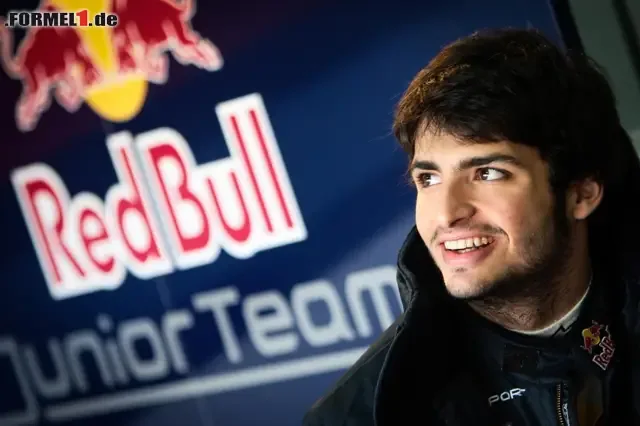
With Nikola Tsolov, the next talent is already in the starting blocks – Racing Bulls team principal Alan Permane described him in Spa as “the next in line” – but with the addition of Lagrue, Red Bull also wants to strengthen the pipeline for subsequent generations.
Furthermore, Red Bull sees the move as a signal to its competitors that it is still capable of poaching high-caliber personnel from rival teams. In recent years, the Milton Keynes-based team mostly made headlines due to the loss of key figures – which led to a long list of departures, including Rob Marshall, Adrian Newey, Lambiase, and Jonathan Wheatley.
The signing of Lagrue is therefore internally seen as proof that Red Bull still possesses the appeal to attract important personnel away from rivals.
The plans with Hart and Lagrue are also in line with what Mekies explained in Austria about his working methods at Red Bull. There, the team principal clarified that internal promotion would always be Plan A when replacing departing executives, but the team would by no means hesitate to switch to Plan B if necessary – namely, recruiting external top talent.
Read more Victory thrown away? Lewis Hamilton takes full responsibility
“Whenever possible, we will try to fill positions internally. We have produced a number of talents in recent years, and we are proud of that. We want to continue this path,” explains Mekies.
“If and when we need a certain range of skills or experience from our esteemed competitors in the pit lane, we will do so – just as we have done before. That is our philosophy: we give our own talents the best opportunities, and if we need fresh impetus from outside, we are happy to get it.”
The Era of Helmut Marko at Red Bull
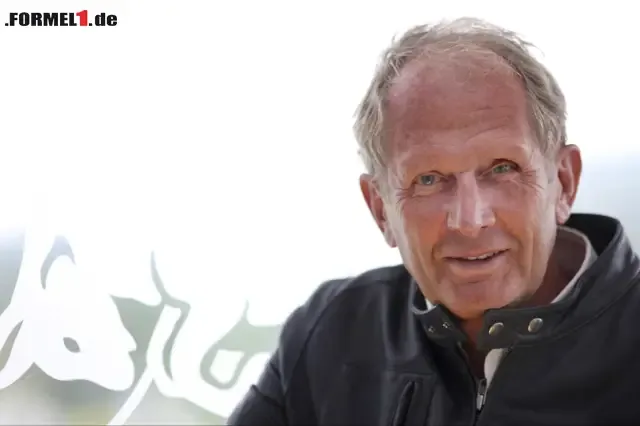
This philosophy is reflected in both the race engineer position and the junior program. Hart represents internal promotion, although Red Bull first had to reverse his move to Williams to make this possible.
Mekies had, by the way, already hinted at exactly this in Austria, although at that time no one in the press conference room knew that he was referring to Hart.
“If I look at the names that have been circulating in recent months, most of them are still in the garage,” he said. “Some never wanted to leave, some have changed their minds and are staying with us.”
While Hart represents an internal solution, Marko’s succession actually combines both approaches. Guillaume Rocquelin had initially been given an even more prominent role, but the leadership of the junior program will now be further strengthened with Lagrue. This is because the latter brings exactly what Mekies described as “a certain range of skills or experience.”
The Verstappen Question: Does Red Bull have enough “Squad Depth”?
Both personnel decisions thus seamlessly fit into Mekies’ vision of how he wants to lead the team and guide Red Bull through this transitional phase. It is a transformation in the sense that many key figures of the previous era of success have left, and new faces are gradually reshaping the organization for the future.
The crucial question, however, remains whether this is enough to keep Verstappen on board long-term. Ultimately, everything boils down to one point: which management team Verstappen himself has the most confidence in for the coming years and where he sees the greatest sporting potential.
McLaren now has several faces in its ranks that Verstappen is very familiar with – including Marshall, Will Courtenay, and from 2028, Lambiase. Red Bull, meanwhile, is doing everything humanly possible to continue to offer Verstappen an environment perfectly tailored to him.
A few months ago, the four-time world champion revealed that he already had someone in mind within the team as a successor for Lambiase, and all signs point to him referring to Hart. Red Bull has now succeeded in realizing this wish through the agreement with Williams.
Should Verstappen ultimately decide to leave, Hart will nevertheless take over the race engineer position at Red Bull – albeit in this scenario alongside another driver.
Mekies, however, hopes it won’t come to that and remains firmly convinced that the team still has enough “squad depth” to return to the absolute top in the coming years.
“As far as that’s concerned, I’m extremely confident,” says Mekies. “We have incredible talent at all levels. Therefore, we will certainly not look for excuses or claim that we lack A, B, or C to be fully competitive again. We have everything in-house.”
“If we still need something to complete the overall package, we will act. But we are certainly not limited by the quality of the talent we already have on board.”
Whether Verstappen has sufficient confidence in Red Bull’s future is a question only the Dutchman himself can answer. What already stands out convincingly in this phase of transition, however, is the clear future philosophy of Mekies and Red Bull – and this becomes exceedingly clear in the succession plans for Marko and Lambiase.
Read more FT1 Hungary: Three Formula 1 regular drivers sit out