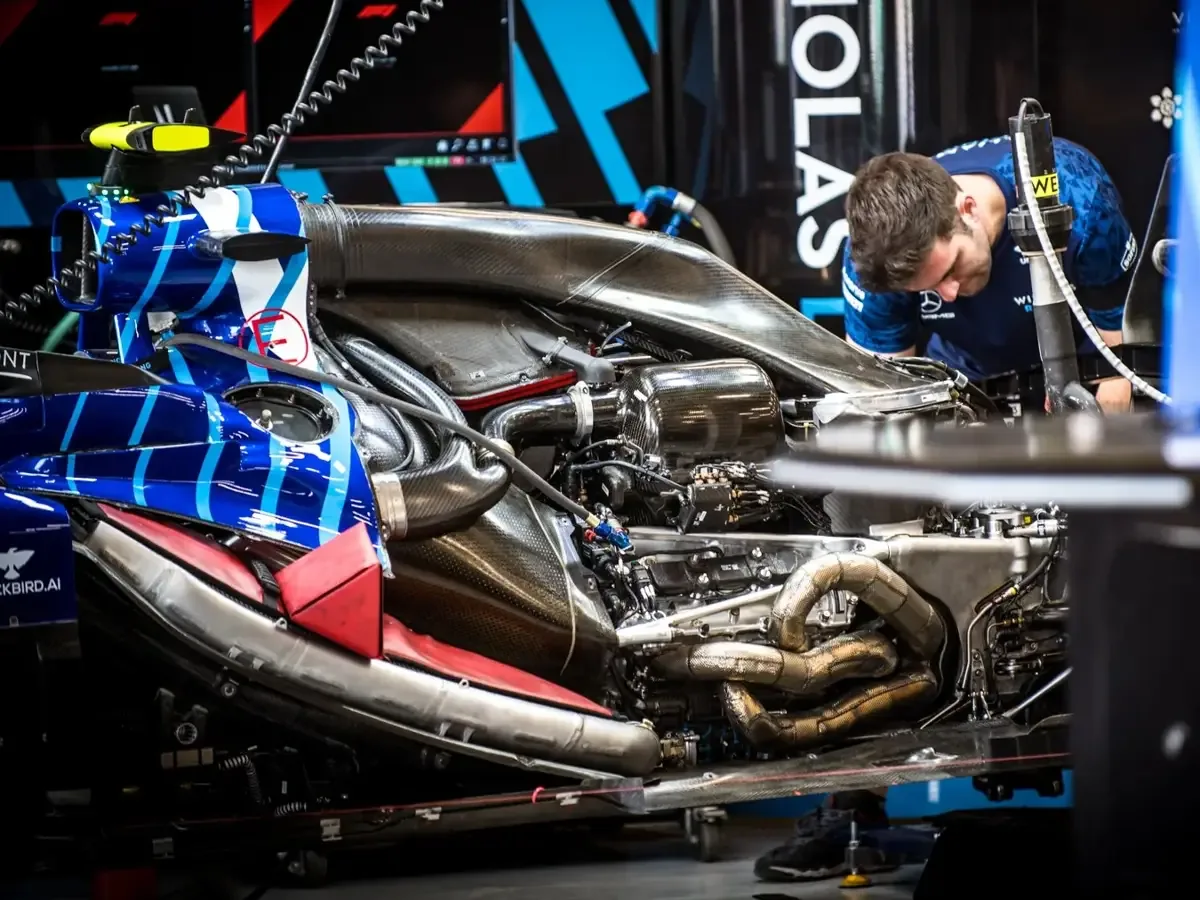
(Motorsport-Total.com) – Against the backdrop of meetings at various levels to discuss changes to the regulations introduced earlier this year, the message from the Formula 1 stakeholders is becoming crystal clear: There will be no backtracking, no revolution, and no major upheavals.
Read more Ralf Schumacher «talks a lot of crap»: Jos Verstappen shoots against experts
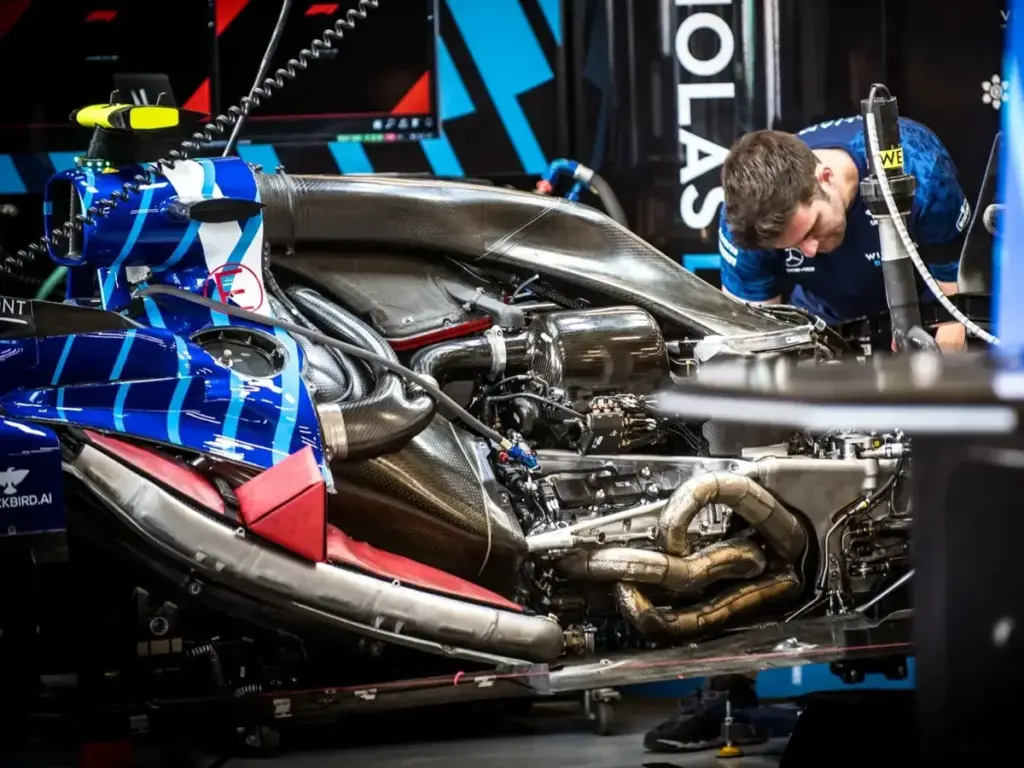
Only optimizations to a format that, while polarizing within the fan community, has been declared largely satisfactory by those who organize the “show” and the broadcasters who pay for it.
That is the message at the highest level. In less guarded moments, however, senior figures in the paddock admit that the 2026 regulations represent an inherent compromise, as the basic concept – an almost 50/50 split between combustion engine and electric power – is flawed.
In an exclusive interview with Autosport this week, Formula 1 boss Stefano Domenicali said that the foundations of the next engine formula, which is to come into effect in 2031, must be agreed upon by the end of this year.
The subtext – even if he did not say it explicitly – is that early determination of a technical philosophy with defined, predictable, agreed, and achievable goals is intended to avoid a repeat of the current state, where a formula came into effect that is still in the beta testing phase.
So how did we get here? The almost 50/50 split was already agreed in August 2022 at a meeting of the FIA World Motor Sport Council (WMSC). It was also decided there that Formula 1 would switch to 100 percent sustainable fuel and remove the much-criticized MGU-H hybrid element from the power unit package.
When these guidelines were ratified, Formula 1 officials understandably sought to keep engine manufacturers on board – and potentially attract new ones – by following the trend of the broader automotive industry.
At that time, the journey was massively towards full electrification, given looming laws against the sale of combustion engine cars in many key markets.
This development has since shifted again, as electric car sales in many of these markets have somewhat stalled – and in some cases become the subject of a rather tiresome partisan political debate covertly funded by the oil-producing industry through lobby groups.
Switching Off
As a result, many car manufacturers have begun to move away from full electrification. Ford, a returnee to Formula 1 in partnership with Red Bull Powertrains, is one of them.
Market forces are changing at a much faster pace than Formula 1’s regulatory timelines. Trying to march in step with the automotive industry is impossible, even though manufacturers remain an important part of the sporting and financial ecosystem.
“I think we are at a moment, a unique moment, where we must not mix mobility and motorsport,” says Domenicali.
“But of course, motorsport is run by teams and manufacturers. And when you see how quickly the landscape of manufacturers changed after ‘Dieselgate’ (when the VW Group was exposed in 2015, followed by other manufacturers, for installing devices to manipulate emissions tests; editor’s note) – and I was at Audi at that time – then that is impressive.”
The Most Successful Constructors in Formula 1
“If I connect these two elements, which should actually remain separate, then it is true that at that time there was a clear statement from all manufacturers: Either we go in this direction or we have no interest in any sport.”
“And I could be even more direct: If we had had an independent manufacturer, we could have said: ‘You know what, okay, let’s offer the teams that want to race a white-label F1/FIA engine, let’s go.’ But we didn’t have that. There was no one at that time.”
“That is the state from five years ago. Now it is clear that electrification has shifted compared to hybridization. And everyone understands: If sustainable fuel is available in sufficient quantity and at the right price, this could be the way to realistically address the emissions problem.”
The Politics of Performance
Car manufacturers have exercised disproportionate power in Formula 1 since the series began spending beyond its means in the late 1990s and early 2000s, while tobacco sponsorship was gradually phased out.
There was even a brief alliance in the late 2000s between Mercedes, Ferrari, BMW, Renault, and Ford to create a rival championship, triggered by a power struggle between them, the FIA, and Formula One Management (FOM).
In those days, the FIA under Max Mosley and the FOM under Bernie Ecclestone were, of course, like two cheeks of the same backside. Mosley typically compared teams and manufacturers with restaurant guests who had developed the belief that because they dined there often, they somehow had a claim to co-ownership of the business.
More recently, under the leadership of Jean Todt and Mohammed bin Sulayem, the governing body maintains a clear separation between itself and the commercial rights holder – occasionally clashing when the FIA crosses into commercial matters, but mostly with a public facade of political agreement in the best interest of Formula 1 as a sport.
In this scenario, car manufacturers have continued to enjoy a seat at the table and occasionally even dictated policy. The first hybrid regulations were agreed in a climate of post-2008 paranoia that further car manufacturers Honda, BMW, and Toyota might leave – specifically Renault made it a condition for its continued participation that Formula 1 commit to electrification.
Formula 1 Quiz
Which engine manufacturer secured the most fastest laps in Formula 1?
Read more «Unacceptable»: Bearman criticizes Colapinto and demands respect
Test yourself now in the Formula 1 quiz and compare yourself with other users
Domenicali’s mention of a “white-label F1/FIA engine” is interesting, as the FIA has trodden this ground before. Immediately after Honda’s withdrawal in December 2008, Mosley announced a tender for a homologated low-cost powertrain.
The author of this article, who had just arrived on the freelance market due to the impact of the global financial crisis on the publishing industry, was commissioned by Cosworth’s PR agency to write press materials announcing Cosworth and Xtrac as the winners of this tender.
At that time, the fear was palpable that further manufacturers would follow Honda’s rapid exit.
Ultimately, the Cosworth/Xtrac powertrain was a flop, mainly because Mosley’s vision of a budget-covered second competitive tier with this package did not survive his removal as president.
“What we have learned as motorsport is above all not to get into a corner where we have to be so dependent on manufacturers,” says Domenicali. “Manufacturers are an important part of what we do. We have to thank them every day and every night, because without them it would be impossible.”
“But we must not stand in a corner where manufacturers can dictate the pace to the sport. That is a learned lesson that, in my opinion, will allow us, together with the FIA as regulator, to find the right package that allows both worlds to exist, to coexist – because we want the manufacturers to be there without a doubt.”
“But we must not be put in a kind of corner with the motto ‘take it or leave it.’ That is what we have to do in the next few years.”
“Of course, it is up to the FIA to propose: a kind of sustainable fuel safely at the center of the future, with a different weighting of what electrification might be in the future, together with a strong combustion engine.”
“Because that is motorsport. It will allow saving many kilos, having pure racing in this regard – with lighter cars, smaller cars that you can really push as hard as possible.”
Who Makes the Decision?
Undoubtedly, lighter is better. The latest cars are only 30 kilograms lighter than their predecessors – at least those that meet the minimum weight – but already seem more agile.
Saving weight will likely mean moving away from the almost 50/50 split of electric power and perhaps even abandoning turbocharging altogether. It is said that Sulayem has assured several leading figures in the motorsport industry of his determination to return to naturally aspirated engines, albeit with a rechargeable hybrid element.
It is believed that this was already discussed at some level with manufacturers during talks last year at the Bahrain Grand Prix weekend, where the final decision was postponed so as not to overshadow the introduction of the 2026 regulations.
The challenge for the commercial rights holder and the governing body is to constructively involve car manufacturers as valuable partners but not give them an effective veto or a mandate to set policy.
The discussions shaping the next regulations are influenced not only by the controversial start to 2026 but also by Renault’s departure as a supplier.
Ford, Audi, and Cadillac may have just come on board, but the lesson from history is that Formula 1 must protect itself against the impact when car manufacturers suddenly have to respond to changing market conditions or other global events.
“Look at what they did at Renault,” says Domenicali. “Renault was at the table when this kind of engine was decided. And then they made the decision to leave.”
“That is what I am saying. We must not get into a situation where the market crisis can lead the manufacturer to make certain difficult decisions to prioritize other initiatives.”
“That is why we have to protect ourselves. We have to know that we live in a world where we can take nothing for granted. And things can change very quickly.”
“The only thing we must avoid is being in a situation where we are naked or surprised. I think the only way is to have a framework regulation that respects and involves the manufacturer.”
“But if they decide that this platform is no longer attractive to them for reasons unrelated to motorsport itself, we can react and give the teams the opportunity to perform and allow the business to remain as strong as it is today.”
Read more Red Bull Crisis: A Promotion and a New Addition from Racing Bulls