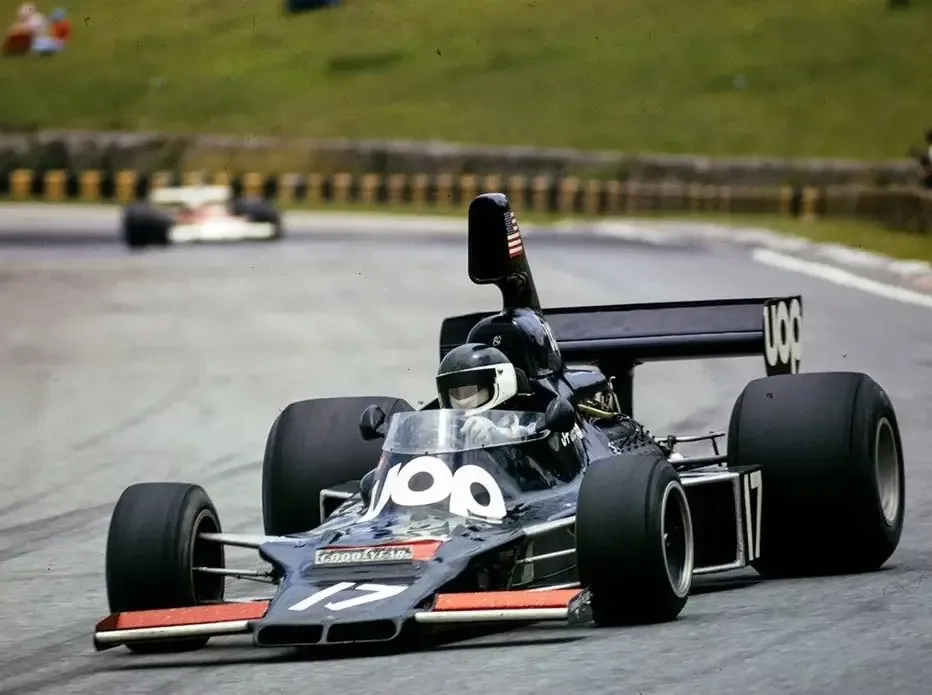
(Motorsport-Total.com) – Just in time for the start of the 2026 Formula 1 season, we welcome Cadillac as a new American player on the grid. Interest in the premier class in the States is booming: With Haas and Cadillac, the USA is sending two true constructors into the race, while Red Bull Ford powers the cars of Red Bull and the Racing Bulls. This is joined by three Grands Prix in Texas, Miami, and Las Vegas.
Read more Formula 1 World Champion 2026: Almost all TV experts agree
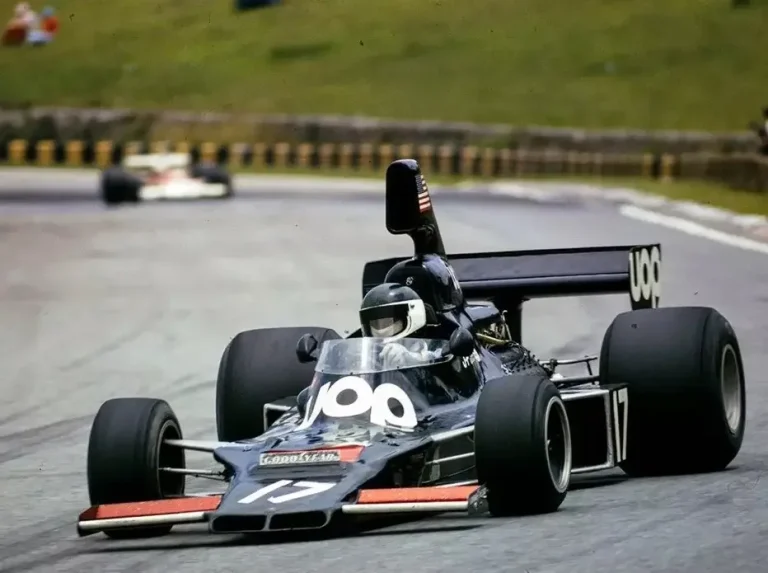
But despite the enormous motorsport tradition in the USA, American racing teams have been somewhat of a rarity since the founding of the World Championship in 1950. We are excluding the numerous teams that only competed in the Indy 500 between 1950 and 1960 – which counted towards the World Championship at the time, but was not a real Grand Prix according to Formula 1 regulations.
There were occasional private US guest starts, such as the curious participation of Indy legend Rodger Ward at the 1959 US GP in a Leader-Cards Kurtis-Kraft-Offenhauser Midget. However, we are focusing on the teams that have undertaken serious, multi-year Formula 1 projects.
Here is our top 5 of US racing teams, based on success, impact, and longevity.
By the way: The UK-based Haas team, which competed with Lola chassis in late 1985 and 1986, scored six points in 19 starts. The highlight was the 1986 Austrian Grand Prix, when Alan Jones finished in fourth and fifth place ahead of his teammate Patrick Tambay – albeit two laps behind winner Alain Prost in the McLaren.
An honorable mention also goes to the Scarab team, which only completed two World Championship starts in 1960. The front-engine car was already outdated when it appeared, but remains a feast for the eyes to this day and is extremely competitive in historic motorsport.
5. Parnelli
Years: 1974-1976
Starts: 16
Best result: 4th place
Best Quali: 3rd place
Fastest laps: 1
Points: 6
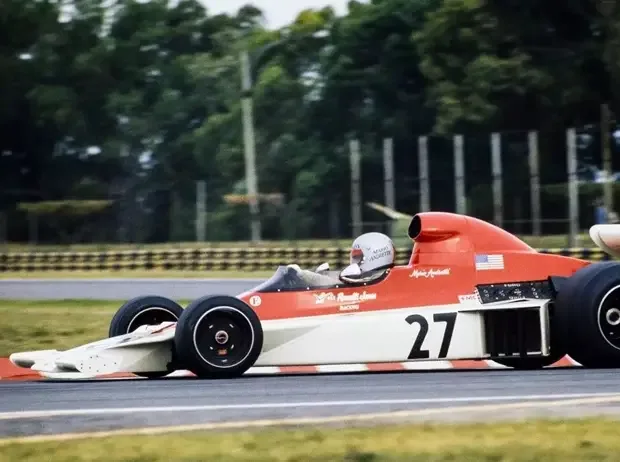
US racing legend and 1963 Indy 500 winner Parnelli Jones founded the Vel’s Parnelli Jones Racing team together with Velko Miletich in the late 60s. Initially, the team celebrated success after success in the IndyCar series.
After two Indy wins and three USAC titles, Parnelli took the leap into Formula 1 in 1974 – with former Lotus designer Maurice Philippe and Mario Andretti at the wheel.
The VPJ4 with Cosworth DFV engine made its debut at the Canadian Grand Prix. Andretti qualified 16th and missed out on points in seventh place by only a quarter of a second. At the finale in Watkins Glen, he sensationally started third but was disqualified for accepting help from his mechanics outside the pit lane.
In 1975, Andretti struggled in qualifying but collected points in Sweden and France. But when Firestone withdrew as a sponsor, a hole opened up in the budget. After only three races of the 1976 season and a sixth place for Andretti in South Africa, the Parnelli adventure was over.
4. Haas
Years: 2016-present
Starts: 214 (As of before the start of the 2026 season)
Best result: 4th place
Best Quali: 4th place
Fastest laps: 3
Points: 386
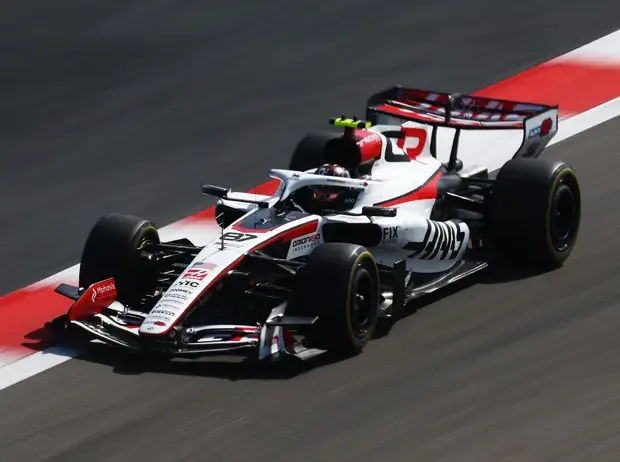
Gene Haas’s squad can be considered the most successful new team of recent decades. The F1 hurdles are high, but Haas scored points right at its debut in Australia in 2016 and stormed to fifth place in the Constructors’ Championship in 2018.
The headquarters are in Kannapolis (North Carolina), plus a base in England and a “hub” at Ferrari in Maranello. Haas was the first US team since the end of Haas Lola in 1986.
The project has an Italian character: Dallara has been manufacturing the chassis since day one, Ferrari supplies the engines. This close technical partnership with Maranello keeps costs in check.
After the era with Romain Grosjean and Esteban Gutierrez, Kevin Magnussen and Grosjean defined the team’s image for four years. A podium is still missing, but two fastest laps and a double success (fourth and fifth place) at the 2018 Austrian Grand Prix are on the books.
2021 followed the valley of tears: With rookies Mick Schumacher and Nikita Mazepin and the focus on the new 2022 regulations, the team remained pointless at the back of the field.
The comeback of Magnussen in 2022 (after the exit of Mazepin and sponsor Uralkali following the invasion of Ukraine) brought an upturn: fifth place at the opener in Bahrain. But the Schumacher name did not bring the hoped-for success; rising accident costs led to Schumacher being replaced by veteran Nico Hülkenberg in 2023.
Read more Too much vibration at Aston Martin: The drastic measure in Melbourne
The VF-23 was fast over one lap but ate the tires for breakfast. Haas finished last in the World Championship, which cost team principal icon Günther Steiner his job. Engineer Ayao Komatsu took over.
In 2024, the team flirted with sixth place in the World Championship but was pushed down to seventh by Alpine’s rain podium in Brazil. For 2026, the team has been reorganized: youngster Oliver Bearman and Alpine refugee Esteban Ocon replace Magnussen and Hülkenberg (moving to Sauber). 2025 was a struggle: aerodynamic problems and bouncing saw Haas slip to eighth in the World Championship.
3. Penske
Years: 1971, 1974-1976
Starts: 32
Wins: 1
Podiums: 4
Poles: 1
Points: 26
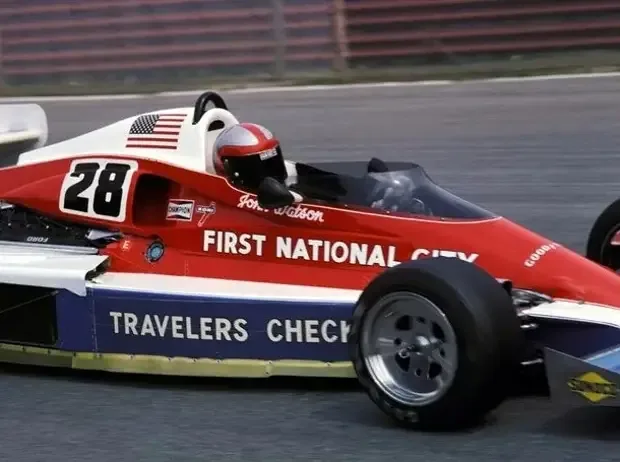
America’s most successful motorsport team tried its hand at Formula 1 only briefly, but those three years were marked by triumph and tragedy.
After first steps with customer McLarens in 1971, the team returned in 1974 with its own chassis. Mark Donohue, brought out of retirement specifically, drove the PC1 to twelfth place on its debut in Canada.
In 1975, the racing team wanted to go all out, but Donohue struggled with the speed of the PC1. After switching to a March 751, he finished fifth at Silverstone before he died in an accident during the warm-up at the Österreichring.
Penske returned with John Watson. In 1976, the new PC4 became truly fast: podiums at Paul Ricard and Brands Hatch paved the way for the emotional victory at the Österreichring – exactly one year after Donohue’s death at the same location. Legendary: Watson shaved off his beard afterwards following a bet with Roger Penske.
Despite fifth place in the Constructors’ World Championship, Roger Penske withdrew at the end of 1976 to focus on IndyCar. The cars still ran under the ATS flag in 1977, which we do not count here.
2. Shadow
Years: 1973-1980
Starts: 104
Wins: 1
Podiums: 7
Poles: 3
Points: 67.5