(Motorsport-Total.com) – It has now been more than a year since Oscar Piastri won his last race in Formula 1: The McLaren driver celebrated victory at the Dutch Grand Prix in Zandvoort on August 31, 2025.
Read more This is the weather for the Formula 1 weekend in Monza

How different the picture still looked in Formula 1 back then: Norris sat dejected in the dunes after his engine failure – resulting in some iconic photos -, Max Verstappen’s sensational comeback still seemed impossible, and Piastri was preparing to take a big step towards his first Formula 1 title.
With his triumph at the Dutch Grand Prix, Piastri extended his championship lead to 34 points ahead of Norris, while Verstappen was still 104 points behind at that time. The latter is also a reminder that Norris is far from written off for 2026, but that is a completely different topic.
Since Zandvoort last year, the picture has changed significantly for several reasons. One week after the race in the Netherlands, a controversy about the so-called Papaya Rules flared up in Italy – and not for the first time.
A botched pit stop by Norris and an undercut led to Piastri ending up ahead of his teammate on track, after which he was instructed to give the position back – rightly or wrongly, he complied with the instruction.
Baku brought the first weekend of 2025 where nothing went right, after which Piastri struggled with the extremely slippery conditions in the heat of Austin and the high altitude of Mexico City.

We all know how the title fight ended, although the completely new regulations for 2026 theoretically offered the chance for a complete reset. Technically everything is different, the cars now place completely new demands on the drivers, and so basically everyone started again from scratch.
Nevertheless, it has not yet become the season the likeable Australian had hoped for. The year began with an accident on the way to the starting grid in Melbourne, followed by a double retirement for McLaren in Shanghai.
That was still part of the team’s difficult start to the season from Woking, but already at the following race weekend in Japan, Piastri was able to impress. For a long time, he looked like a serious contender for victory, and even the second place he ultimately achieved exceeded expectations.
The subsequent podium in Miami also fit the picture of an upward curve, but since Canada it has gone downhill – in Montreal itself due to a strategic error by the team and a collision with Alexander Albon. Since early May, Piastri has not been on the podium, while McLaren as a whole has gradually found more pace.
Why McLaren sees parallels to Austin and Mexico 2025
The question of the exact reason for Piastri’s problems is much harder to answer in 2026 than in the past.
Especially on tracks that consume a lot of energy, factors come into play that a driver does not have full (or sometimes any) control over. “It’s shit,” was Piastri’s answer when I asked him in Spa about the loss of speed on the straights, which even McLaren could not explain at that time.
As it turned out, this was related to the self-learning algorithms of the power unit – which basically says everything about Formula 1 in 2026. Piastri expressed himself very clearly and was absolutely right.
The last 20 winning drivers in Formula 1
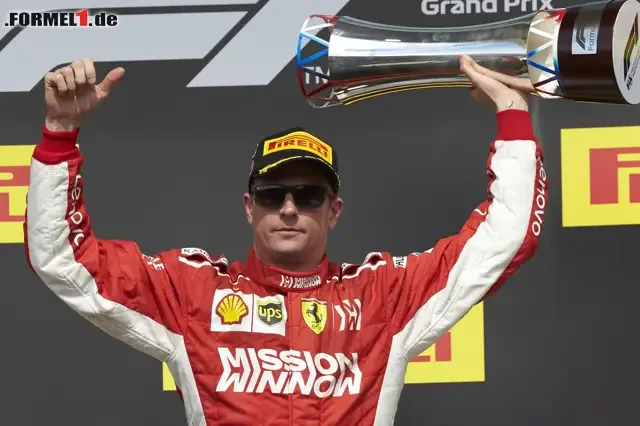
Formula 1 then moved on to two energy-intensive tracks, the Hungaroring and Zandvoort, where the 2026 power units weighed significantly less. However, Piastri’s problems did not disappear. Norris won both races, noting that Piastri was heavily hindered by Carlos Sainz while leading in Hungary.
At Zandvoort, however, Piastri’s gap at the finish line was more than 32 seconds, which led him to investigate afterwards.
“Unfortunately, it’s not the first race where the pace just wasn’t there. Lando won the race by a big margin, so the car is obviously well set up,” he said. “It was fast at the last two weekends. I think these two tracks suit the car. For whatever reason, I just wasn’t able to get that pace out.”
Stella: Has nothing to do with psychology
Not long after Piastri made these statements in the media round, Stella tried to analyze the topic further in McLaren’s hospitality – also because it had been speculated that the problem could be mental and related to a lack of confidence. Stella, however, firmly rejected this addendum.
Read more Norris, Verstappen and Leclerc: Why top drivers no longer switch
“I don’t think it has anything to do with a psychological component – it’s purely technical,” said the Italian.
Indeed, he sees parallels between what happened last year on certain low-grip tracks and what is generally happening this year with cars that have significantly less downforce.
“I think we already saw last year with Oscar that he has to adapt from a driving perspective when the car has so little grip – as we saw, for example, last year in Mexico or Austin. He has to adjust the way he drives, how he thinks, and what he expects,” said Stella.
This makes driving feel less natural than the previous year, which according to Stella plays a crucial role for Piastri: “And that requires, I would say, quite a bit of mental effort. It makes him lose a few tenths because you have to process things first, rather than just driving by instinct.”
“I think it’s one of those cases where you have to adapt your natural driving style to the demands of the car. So it remains purely in the realm of driving and the technical side of things.”
This could also explain why the gap in Budapest and Zandvoort was larger – two tracks where the drivers were less limited by the power unit and could get closer to the limit. Norris currently finds this easier in the 2026 cars with less downforce than Piastri.
The 25-year-old Australian himself looks for the causes in the same direction and believes that his current driving style may not always be optimal for the cars of the new regulations: “I think it definitely has to be something with the driving style,” Piastri agreed.
“In qualifying, I felt much more comfortable this weekend. I was good in Q1 and Q2. Okay, I didn’t quite push in Q3, but I was in the fight for the top. The picture in the race was completely different though. I think that’s the biggest difference.”
Why the gap in races is bigger than in qualifying
According to Piastri, this last point runs like a red thread through the season: His gap to Norris is bigger in races than in qualifying, which is also reflected in the data.
Data from the data partner Paceteq shows that Piastri’s average gap to Norris in the first half of the season was only 0.068 seconds in qualifying, but 0.227 seconds in races. At Zandvoort, this gap increased further.
Midterm reports: The best Formula 1 drivers at the summer break

“I find that the rear of the car is just very difficult to drive in races,” admitted Piastri.
“At some points in today’s race, I felt much better with it, but the pace just wasn’t there. As I said, it’s not the first race this year where that was the case. Some were good, some very strong, but there have now been too many where I was really far behind.”
That is exactly what Piastri and McLaren are now working on together.
Similar situation to Norris last year
To find a good example of how such a situation can turn around during a season, the team doesn’t have to look far. At the beginning of last year, Norris also struggled with his feeling for the McLaren, but primarily at the front axle and in qualifying. For Piastri, the problem now affects the rear of the car and especially his race pace.
At that time, McLaren introduced a revised front suspension that gave Norris more confidence when attacking and an overall better feeling for the car. Whether specific hardware changes will also be necessary for Piastri this time remains to be seen and depends on whether it is purely about adapting his driving style to the 2026 cars.
Formula 1 Quiz
Oscar Piastri’s best position on the Formula 1 starting grid was?
Test yourself now in the Formula 1 quiz and compare yourself with other users
Either way, it remains to be hoped that Piastri will regain his momentum. For a driver of his caliber, four months without a podium and a year without a win already feel too long, and many in the paddock would wish the always friendly Australian a much-needed boost.
The good news is that McLaren at least has a competitive package again. So if Piastri finds the right feeling for this highly complex 2026 car at some point, he should be right back at the front immediately.
Read more Mercedes: No ADUO update in Monza, new engine only in October