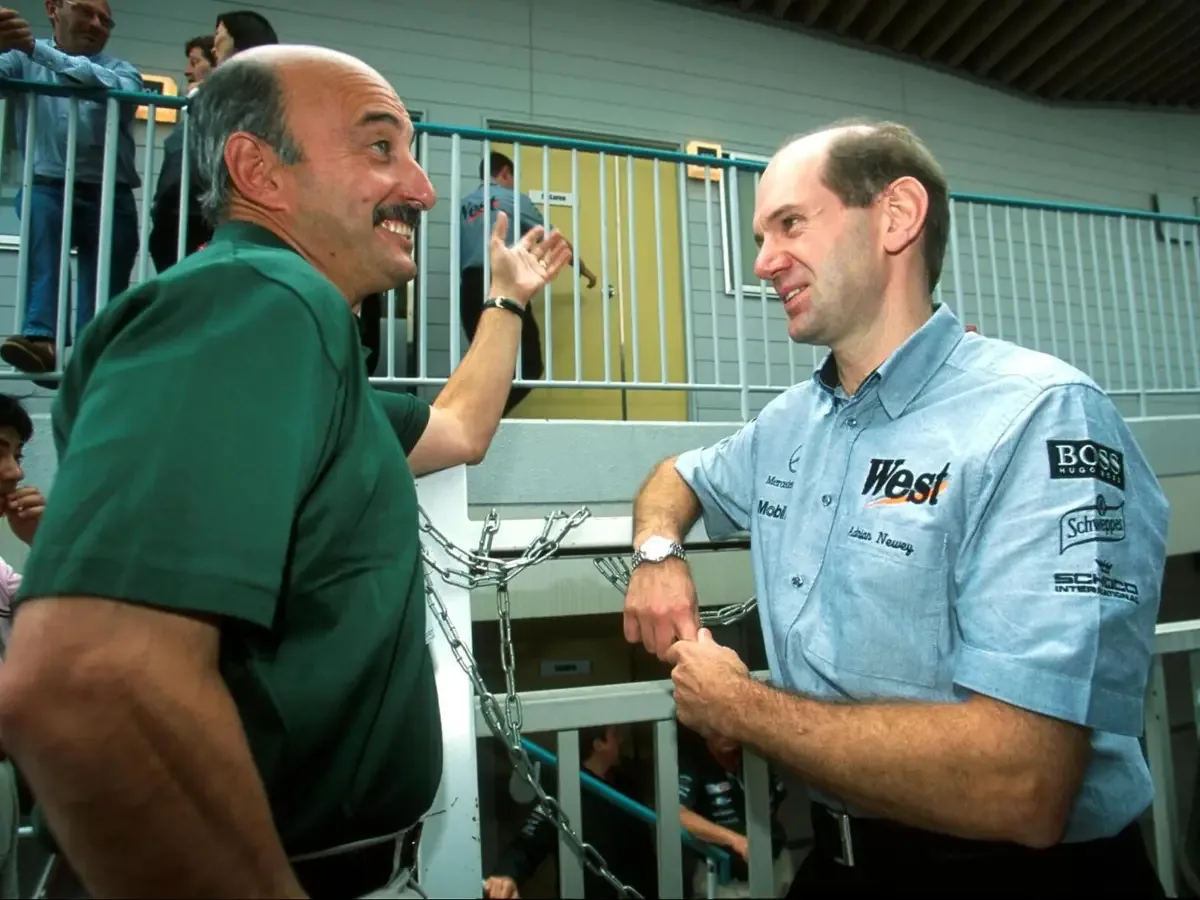
(Motorsport-Total.com) – On June 1, 2001, the Formula 1 team Jaguar announced that it had poached Adrian Newey from McLaren and that the highly regarded engineer would switch after his contract expired at the end of July 2003.
Read more Conversations ended: Why Mercedes will not buy into Alpine
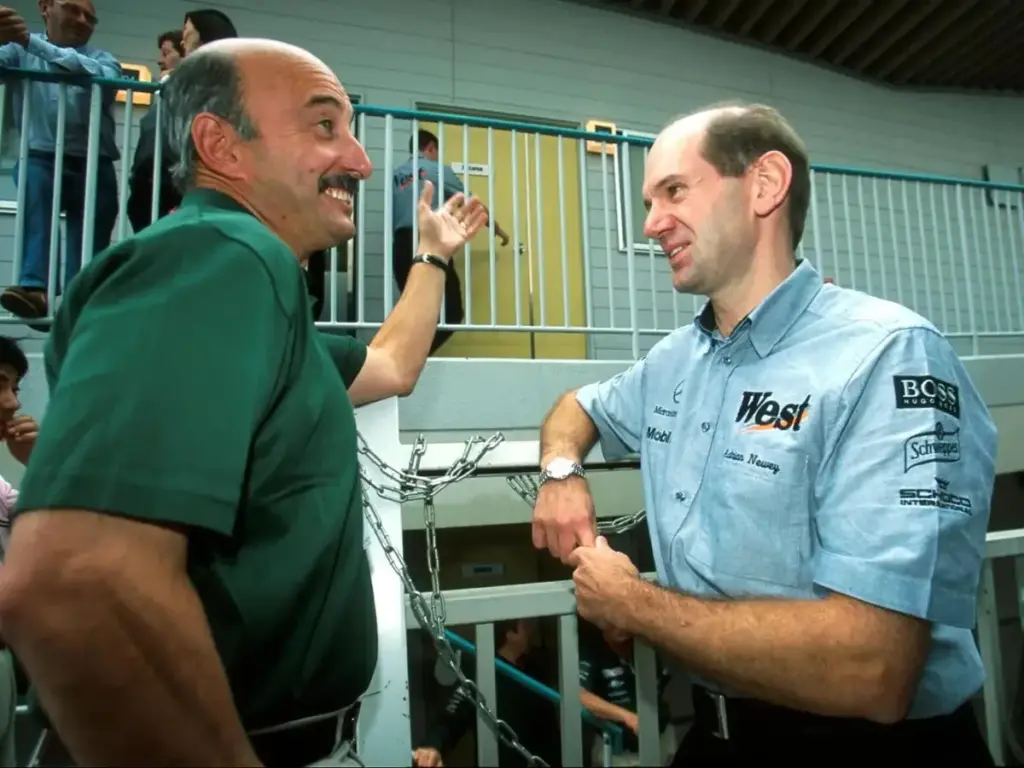
This week’s issue of Autosport magazine had already predicted this development. The press release, which went out from the fax machine in the office at 8:30 a.m. that Friday and quoted both Jaguar Racing CEO Bobby Rahal and Ford Premier Performance Division CEO Niki Lauda, made the story official, which had just appeared at the kiosks shortly before.
In the following two weeks, a fierce battle for Newey’s services broke out, with the only winners being the lawyers paid by the hour.
“I am excited about the prospect of having Adrian on board,” Rahal said in the statement. “We have known each other since our time together in IndyCar, and our friendship certainly played a key role in making this possible.”
“Design teams led by Adrian have developed six of the Formula 1 cars that have won both the Constructors’ and Drivers’ World Championships in the past nine years, with an average win rate of 50 percent.”
“His influence has shaped the past decade of the first century of motorsport, and this new chapter with Jaguar Racing will give Adrian the opportunity to lead one of the most emotional names in motorsport to Formula 1 World Champion status,” Rahal said.
“This is great news for Jaguar Racing, and of course, we are very pleased to have achieved something of this magnitude,” Lauda added. “We have always taken our Formula 1 ambitions very seriously, and this underlines our commitment to winning.”
How Newey justified the move …
If these corporate-typical praises gave the impression that Rahal and Lauda had worked together towards a bright future for Jaguar, the reality was quite different – and ultimately contributed to Newey getting cold feet. But we are getting ahead of ourselves.
“It was not an easy decision for me,” Newey himself was quoted in the Jaguar statement. “I have greatly enjoyed my previous four years at McLaren and derive great satisfaction from the successes we have achieved as a team.”
“But ultimately, the prospect of working again with my close friend Bobby, whom I have known since 1984 at March Racing, combined with the exciting challenge at Jaguar Racing, was irresistible,” Newey said.
Adrian Newey’s motorsport career
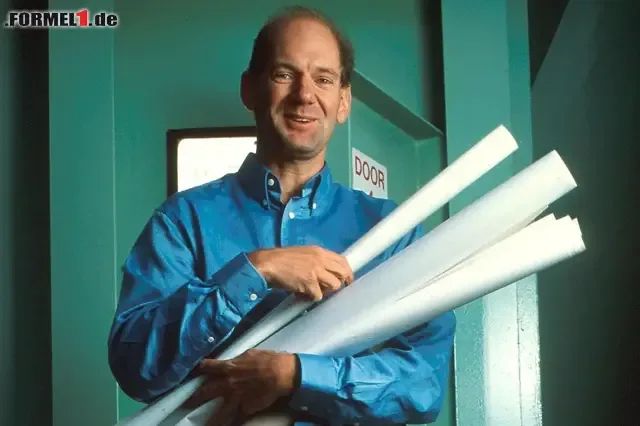
“In the meantime, I have a job to do, and I will continue to dedicate myself fully to McLaren to win races and championships,” he emphasized. While the lawsuits went back and forth, Newey later distanced himself from this statement – and in fact stayed with McLaren until 2005.
Nevertheless, his position in the team suffered. McLaren’s first reaction came that same afternoon in the form of a press release: Newey would not leave and had instead signed a contract extension until August 2005.
It was not only busy weeks for the fax machine in the office but also for the author of this text, whose tasks as a junior editor at the magazine F1 Racing included managing the enormous paper and toner consumption of the device.
Both teams insisted they had secured Newey’s services, and a series of injunctions and counter-injunctions followed.
… and ultimately backed down
“It’s a contract, it’s as simple as that,” Rahal said about his agreement with Newey at the time. “McLaren is trying to portray it as if one counts more than the other, but it doesn’t.”
When the dispute went to court, it turned out that Newey had changed his mind about the move – despite his long-standing friendship with Rahal, whom he had led as race engineer to the CART title and Indy 500 victory in 1986.
“Shortly after I agreed to move to Jaguar, I realized that a team change was not the right path for me,” Newey was quoted in a McLaren team statement on June 10, race day in Canada.
“I had previously agreed with Jaguar that nothing would be released before 8:30 a.m. on Friday morning. When I spoke with them and informed them of my decision, they agreed to withhold the press release.”
“At that time, only a few people were affected. Nevertheless, it seems they decided to release the statement,” Newey said.
“One of the reasons for my decision was the enthusiasm for the idea of working again with Bobby. Maybe that led me to take a path I would not have chosen under other circumstances.”
Read more Franz Tost: Kimi Antonelli belongs «to the new superstars»
Why Newey was unhappy at McLaren …
It is worth looking at the cultural and sporting circumstances at McLaren at that time as well as Newey’s difficult relationship with team boss Ron Dennis. In 2001, McLaren came out of a difficult 2000 season in which both driver and constructor titles were lost and they also lost politically to Ferrari, for example with the ban on aluminum-beryllium pistons.
Newey found the continuous gray aesthetic of the McLaren world creatively stressful. So much so that shortly after his arrival, he drew Dennis’s anger by painting his office in a delicate blue-gray.
Nevertheless, the cars were competitive until 2000 before a series of engine failures overshadowed the start of the season and world champion Mika Häkkinen lost form. In the summer, Dennis suggested Newey take a break and removed him from test drives.
Crashing failure: These Formula 1 mega projects were never successful

In his autobiography “How To Build A Car,” Newey describes a meeting in August 2000 at the pool of Dennis’ house in southern France. There, Dennis hinted that he intended to step back in the long term and leave the business to Newey and McLaren COO Martin Whitmarsh – but dependent on their “commitment,” without naming a timeframe.
However, Newey did not want to wait for Dennis to retire. “That afternoon, a cold wind blew over the pool,” Newey writes. “Ron has many strengths, but also some weaknesses, and one of them is the expectation of unconditional, unwavering loyalty.”
“When I was not prepared for that, our relationship cooled off and never became the same again,” Newey said. “Painting my office was one thing. Not falling to my knees in gratitude was something quite different.”
… but still extended his contract
Meanwhile, Rahal stepped in at Jaguar, which had emerged from the Stewart team. After the sale to Ford, the then-owner of Jaguar, managers from Dearborn began to intervene more strongly – with sometimes hard-to-understand decisions.
Putting an experienced racer like Rahal at the top was quite plausible, even if some in the Formula 1 paddock held the unhelpful view that Americans should stay out of a sport they did not understand.
But Ford invested a lot of money – top driver Eddie Irvine was known to be the highest-paid employee – and was rewarded only with ninth place in the constructors’ championship in 2000. The board quickly concluded that changes were necessary.
McLaren’s 2001 season started badly: Häkkinen suffered a crash including a concussion at the opener and narrowly escaped another accident in Brazil. After the fifth race in Spain, he had only four points – and that remained the case after his clutch broke in the last lap while leading.
Newey’s contract was approaching its end, and he was offered a new deal that amounted to a pay cut, which he declined. Shortly thereafter, Rahal contacted him and offered him “two and a half times” his McLaren salary.
Later, this offer was quantified at 3.5 million pounds per year. Newey shook Rahal’s hand, signed a letter of intent, and informed Dennis of his departure.
Dennis then reacted and agreed to match Jaguar’s financial terms and also contractually gave Newey the option to partially withdraw from Formula 1 and work on the America’s Cup. This corresponded to Dennis’ approach when Gordon Murray lost interest in Formula 1 but he wanted to keep him in the company. The result at that time was the F1 road car project.
Newey as a pawn in the Jaguar power struggle?
Dennis also made Newey aware of the escalating power struggle at Jaguar between Rahal and Lauda, which had started in February and quickly expanded his influence. He was proven right, as Rahal had to leave before the end of the season.
“I was mainly interested in Jaguar because of my relationship with Bobby, as the relationship between team boss and technical director is crucial,” Newey writes in his book. “I did not want to move just to become a pawn in a Ford-supported power struggle within the team. A big career risk.”
So Newey faced the difficult task of telling Rahal that he would not be moving to Jaguar after all. But why was the move announced in the first place?
Formula 1 Quiz
What is the McLaren team’s win rate in Formula 1?
Test yourself now in the Formula 1 quiz and compare yourself with other users
After the contract dust settled and Jaguar had to admit defeat, the widespread opinion in the paddock was that Lauda was behind the whole affair to weaken Rahal’s position. If that was the case, Newey still became a pawn.
There is a famous quote often mistakenly attributed to Sun Tzu that you only have to stand by the river long enough until the bodies of your enemies float by. Rahal’s thoughts when Lauda himself fell victim to the internal Ford/Jaguar carousel in November of the following year are not recorded.
Newey ultimately stayed with McLaren but disliked both the sterile steel-glass headquarters designed by Norman Foster, into which the team moved in 2003, and the new “Matrix Management” system introduced by Whitmarsh and Dennis in the technical department. In his book, he described it as a measure to curb him.
Read more When Haas wants to decide on its driver lineup for 2027
Either way, he remained dissatisfied for the rest of his time in Woking.