(Motorsport-Total.com) – When the new Formula 1 entrant Cadillac began searching for a racing team manager a whole year before its debut on the 2026 starting grid, it didn’t take long or far to find the right candidate.
Read more Talks with Red Bull: FIA does not intervene with the Macarena wing!

Looking over to Haas, the previously last new Formula 1 team in 2016: There, long-time team manager Peter Crolla was looking for a new challenge. The prospect of building a team from scratch again fulfilled all his wishes.
After initial talks with Graeme Lowdon, who was recently replaced as team principal by Marcin Budkowski but was considered the driving force behind Cadillac’s respectable Formula 1 debut, Crolla dared the fresh start: Within nine months, he completely rebuilt the race track team.
“At that time, I had been with Haas for over nine years and was definitely ready for a change and a new challenge. I needed something that would reignite my passion for the sport,” Crolla explained to Autosport, a sister platform of Motorsport-Total.com in the Motorsport Network.
“I love building a team. It fills you with great pride, and everything just fell into place at the right time. It’s my second team build-up, about ten years after the first, and it was simply fantastic. The dynamics, the responsibility, and the thrill are incomparable.”
“These nine months were probably the most fulfilling time of my career: You start in an empty building with a plan and get the authority to implement your own ideas.”
A completely different task than back then at Haas
The role of a racing team manager is extremely broad and begins with responsibility for the entire organization of the racing team. Once preparations and logistics before the event are completed, the role at the track shifts to a sport-oriented function – this also includes communication with the world governing body FIA and F1 management.
Building a new team from scratch adds an enormous fundamental component to this task. Crolla used his experience from Haas to approach the project at Cadillac – a rare opportunity in Formula 1, as new teams are very rarely added.
“The sport was a completely different world back then,” Crolla recalls about building Haas. “We were still in the Bernie Ecclestone era. The sheer size was a huge issue, and for me, it was the first time. It was exciting. I worked with great people back then and learned a lot. I think that prepared me well for the second time.”
When asked what his most important lessons from the Haas time were, Crolla answered: “I think the race calendar and the demands on a team grew enormously during that period. I wanted to make sure we approached this project like a big team and had everything we needed to handle the task well.”

“In my opinion, it was never about starting small and then growing. There’s no time for that because once you start racing, the time for such projects drastically decreases,” he says.
“For me, it was about doing everything to the best of our ability, using the available budget as best as possible, and creating a team ready to race and do a good job.”
For him, there were three pillars for how this first year had to look. “First: a respectable participation. That means we show up on time, do things right, and keep our heads down. I think we achieved that,” says Crolla.
“The second pillar was reliability – we are definitely still working on that. And the third is performance; that’s where we are now. So it’s going as I imagined. So far, everything is going well, I would say.”
Thinking like a top team from day one
While the factory in Silverstone was already standing when Crolla joined in April, the race track team that was to travel the world was still a blank slate. Crolla then sat down with the also newly hired executives (logistics manager Pete Simmons and chief mechanic Nathan Divey) to design the schedule until Melbourne 2026.
“We had a collaborative approach and a shared vision of what a good racing team in 2026 must look like,” explains Crolla. “There’s no manual for it. There’s no guide on how to do something like this. But we worked very hard, and there were hardly any disagreements about what we wanted to implement.”
“We just knew it had to be the best – but above all, it had to be ready on time,” he says. “There were no excuses for anything missing because in those nine months, everything was doable, especially with the freedoms and budget we had.”
“We had to put a lot of pressure on suppliers but worked with proven partners we already knew. People we trusted – that was enormously important. To know who you can rely on and who you can push to the limits.”
Read more «We are confident»: Why Audi expects to score points again in Zandvoort
Formula 1 teams that changed their design during the season

In the end, every organization stands or falls with the quality of its employees – this is no different in Formula 1, as Cadillac assembled a team ready to compete with the established teams. Given the long notice periods in the industry, this was no easy task, especially for a team without a previous track record.
“We had to be quite aggressive in recruiting because many people had long notice periods,” emphasizes Crolla. “In this sport, no one is available in less than three months, some had six months’ notice.”
“Many only joined us in the second half of 2025, and there was no settling-in period. They had to get stuck in and push through immediately. Every day, a huge amount of equipment arrived; the workload was phenomenal. But everyone rose to the challenge.”
Recruiting without fair-weather mentality
But just as this start-up culture had attracted Crolla to the Cadillac story, many other newcomers from established Formula 1 teams seemed to feel similarly. No one had illusions about the upcoming hurdles or expected a walk in the park.
“No, it would have been completely naive if someone from an established team had come and thought it would just run by itself,” nods Crolla. “People understand the big picture: When you come to such a project, it’s not Mercedes. It’s not Ferrari, where the processes have been honed for decades. But the chance to shape your own environment – I think that was the big incentive for many.”
“The crucial point when bringing in people from other organizations is to recognize and use their strengths and experiences to shape our joint processes,” he says.
“The quality and number of applicants from other teams for the race team and the entire company was really very positive. But you need the right attitude to grow with the task. This is not a cozy nine-to-five job. You have to dig deep and be in it for the long term.”
Not just simple milestones
Cadillac met every internal and external schedule on the way, was ready on time for the start of winter testing, and brought one of its cars to the finish at the season opener in Australia. But subsequent teething problems with reliability and processes, as well as falling behind Aston Martin at the back of the field, made it clear that just showing up was only the beginning.
“Those were not easy milestones. There was literally blood, sweat, and tears from everyone involved,” Crolla looks back.
“It basically becomes your life. It has to, because you work extremely long days and expect the same from everyone else. There is no more beautiful sport where you see the fruits of your labor so directly as when you build a car that then drives on the track for the first time.”
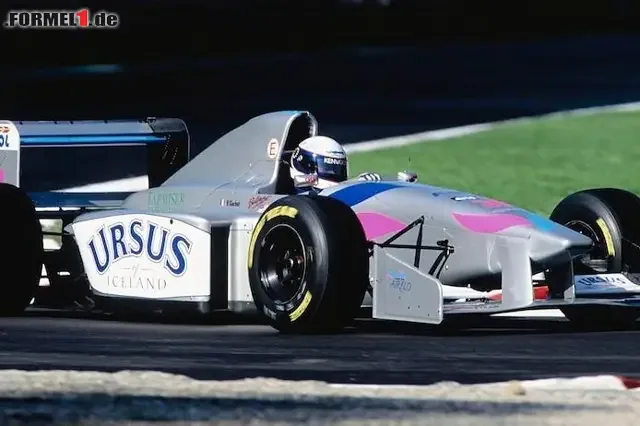
New Formula 1 teams since the 1990 season
“It may have been on a cold, rainy afternoon in January in Silverstone, but it was fantastic. It gave everyone a great feeling of achievement.”
“Of course, we encountered reliability problems,” he notes. “I don’t think that surprised anyone. It’s about how you deal with them, how you tackle them, and how you recover from them.”
“For me, nothing that happened was outside what I expected. I probably even imagined it to be a bit harder and expected even more disappointments at times. Austria was probably a low point for us, but that’s part of the journey. If that surprised people, then it was probably a useful experience we had to go through.”
Teething problems, frustration, and looking ahead
As Cadillac moves into the next phase – now under the leadership of former Renault man Budkowski – the team will move into a brand-new US headquarters in Fishers (Indiana) next year, which according to Crolla will be an “outstanding base for operations,” while the site in British Silverstone will be expanded in the coming months in parallel.
“Starting to race is not the endpoint in building and developing the company. It’s actually just another stage on this path. And I think only when all these individual areas are fully operational will we see the scale of what we are building here,” he adds.
“We have some really talented people here. And without wanting to praise ourselves too much: We are doing a good job, but we are just at the beginning.”
Read more Isack Hadjar with special helmet design — after funny trophy accident last year