(Motorsport-Total.com) – While Aston Martin introduced its first major upgrade package for the AMR26 at the last race before the summer break in Hungary, engine partner Honda is bringing its first update of the 2026 Formula 1 season to Zandvoort.
Read more Ex-Ferrari engineer Smedley: «Hamilton reminds me of Michael Schumacher»

With Adrian Newey’s first upgrade of the year, the deficit on the chassis side was significantly reduced. Although Aston Martin is still far from its goal, numbers from Paceteq show that the deficit in terms of race pace in Hungary was “only” 2.034 seconds per lap.
At the previous weekends in Silverstone and Spa, this deficit was still more than five seconds per lap, with two important limitations. First, both tracks are significantly longer, while the Hungaroring also depends less on the powertrain’s performance.
The latter remains a weakness for Aston Martin, although Honda hopes to make a step forward with its first ADUO upgrade of the year at the start of the second half of the season.
This upgrade focuses entirely on the combustion engine, which General Trackside Manager and Chief Engineer Shintaro Orihara continues to describe as Honda’s biggest weakness compared to the competition.
Why the combustion engine is the focus
“Our engine performance is definitely poor compared to other manufacturers,” he explains, emphasizing: “The most important point we need to improve now is therefore our engine performance, because as already mentioned, the gap is quite large.”
“Without an improvement in the performance of our combustion engine [the rest doesn’t help]. For example, if we improve energy management, it doesn’t help if the engine performance is poor,” Orihara explains in an exclusive interview with Motorsport-Total.com.
“That’s why we are now focusing purely on improving our engine performance. Once we have achieved our goal there, we might be able to optimize some other small areas. But our main focus remains on engine performance, the combustion engine.”
Crashing failure: These Formula 1 major projects were never successful
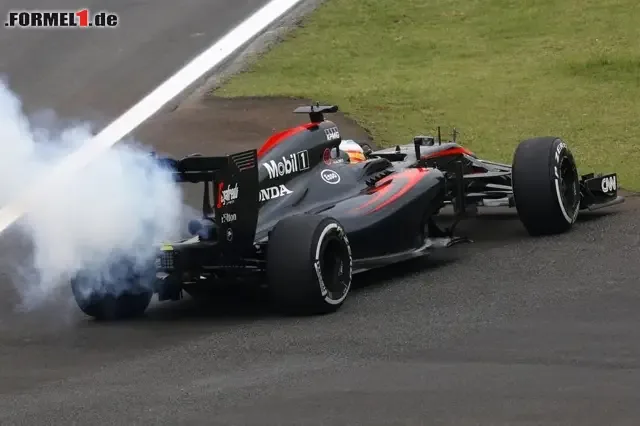
Honda knows that closing the gap in pure performance will take time, so further upgrades will be necessary after this first step. Some of the most optimistic estimates expect a gain of up to 30 hp.
When asked about the specific goal for the Zandvoort upgrade, Orihara names a similar goal as Aston Martin in Hungary: to get back into the so-called “race field.” On the chassis side, this has already been achieved, but Orihara emphasizes that the same must happen on the powertrain side.
Read more Fernando Alonso drives a $5.9 million Lamborghini through Monaco
“Our goal is to get back into the race field, into a situation where the ten or twenty milliseconds that we try so hard to find every weekend can actually make a difference,” he emphasizes.
Honda faces new challenge with drivability
As the powertrain undergoes significant changes, the upgrade in Zandvoort also raises another question. It concerns a term that was frequently discussed in the first months of this Formula 1 season: drivability, i.e., the feeling the drivers have from the powertrain.
“We have developed our tools to optimize drivability. We have made good progress and were close to what we wanted to achieve,” says Orihara. “But when we introduce the Spec-2 engine, the combustion characteristics will change significantly.”
“Maybe not drastically, but there will be a big difference,” he explains, adding: “Then the engine behavior in the cornering phase will also change. So yes, we have to redevelop our drivability.”
This goes hand in hand with Aston Martin’s upgrades on the chassis side, which also affect the drivability of the powertrain. “With the change in car specification, cornering speeds will be significantly higher. And then the requirements for drivability will also change,” says Orihara.
It sounds like Honda is facing the same drivability challenge as at the beginning of this year, but Orihara emphasizes that the Japanese manufacturer will under no circumstances start from scratch again. After all, the insights gained can also be applied to the new specification.
“There were great advances in this first half of the season. We developed our optimized method [for drivability],” he emphasizes. “We will introduce our new engine and will probably have to do more work to improve drivability again.”
“But now we know how to do it and where we should improve,” he shows optimism and emphasizes: “That was a big learning effect, and we can transfer this learning point to our B-spec engine.”
Partly because of this aspect – the work on drivability – Aston Martin’s recent filming day at the Hungaroring with the new powertrain was so important. It has already provided both parties with initial data for analysis and is intended to help avoid unpleasant surprises in Zandvoort.
Read more Emerson Fittipaldi trusts Lewis Hamilton to compete for the title at Ferrari