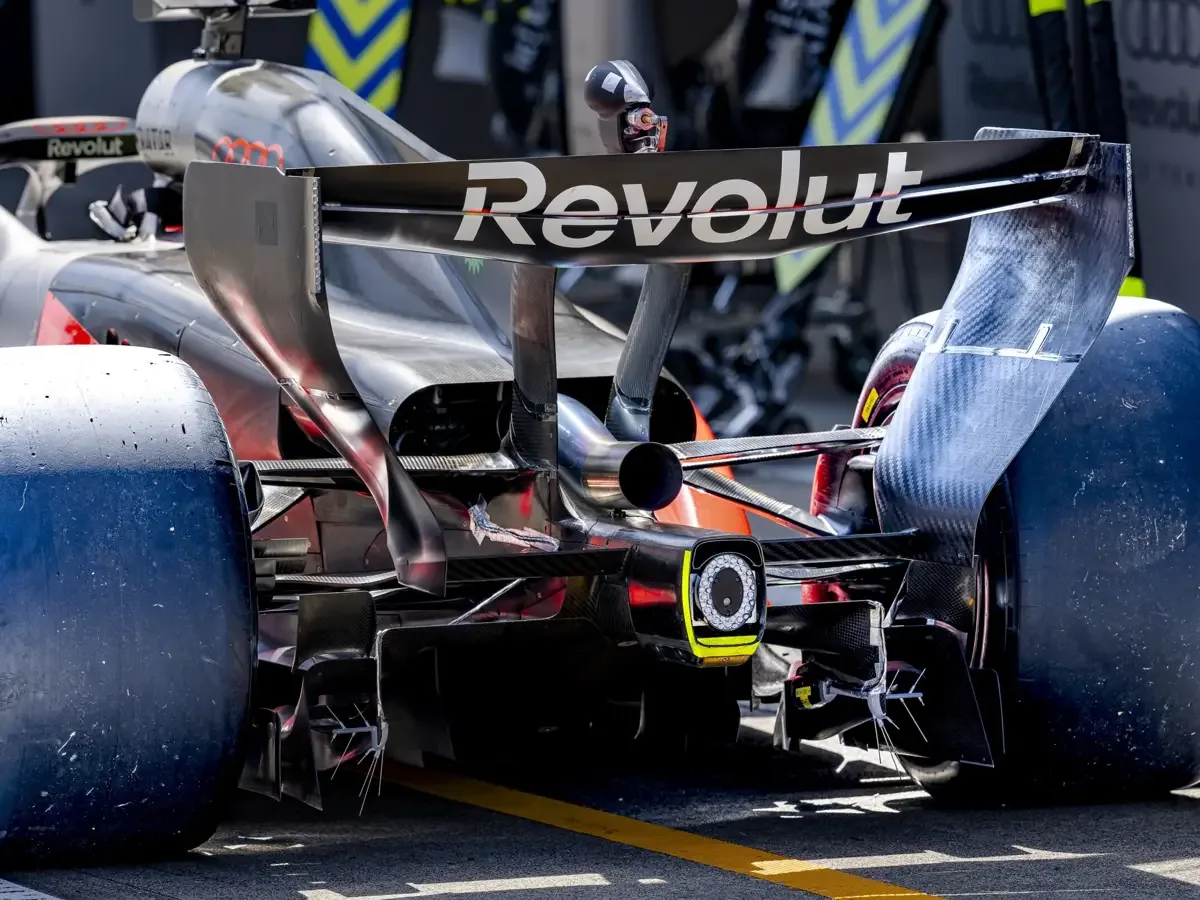
(Motorsport-Total.com) – In the paddock, many describe the current power units as the most sensitive and complex in the history of Formula 1. The strong electrical component requires significantly more complex considerations about how and where a limited amount of energy is used.
Read more So the drive from Red Bull/Ford became a big surprise
Also for this reason, the engines will change again from 2027. By increasing the fuel flow rate – a measure that requires larger tanks and thus newly designed chassis – the performance of the combustion engine will be increased by about 50 kW, or nearly 70 hp.
At the same time, the power of the MGU-K will be reduced by the same amount, with the goal of shifting the original 50/50 ratio between combustion and electric parts towards 60/40 in favor of the combustion engine.
This approach is intended to simplify the management of the power unit, along with other innovations. However, it is clear that manufacturers must also be given development leeway to refine the engines.
Some restrictions remain inevitable, as the electrical component brings limits resulting from the original regulatory decisions. However, this does not mean that the situation cannot improve significantly.
Ultimately, the teams are only at the beginning of this technical cycle, and as with the first hybrid power units in 2014, the development leeway is enormous – both in terms of reliability and pure performance and management.
More test bench time in the next three years
For exactly this reason, some innovations regarding restrictions on test bench testing were also introduced in the latest draft regulations, which was published shortly before Miami.
Read more Explained: This is why Russell does not have to worry yet in the World Cup duel
In the regulations, these tests fall under the category of so-called “Restricted PUTB Testing,” meaning all test bench runs where a manufacturer operates the engine (fully or partially) or the ERS to measure torque or other operating parameters relevant for evaluating performance and behavior.
To prevent costs from spiraling out of control, the FIA sets an hour limit, divided into “Occupancy Hours” and “Operation Hours.” The latter are particularly crucial as they represent the phases in which the engine runs at more than 7,500 revolutions per minute and thus operates under more realistic conditions.
| Year | 2022 | 2023-2025 | 2026 | 2027 | 2028 | 2029 | 2030 |
|---|---|---|---|---|---|---|---|
| old value | 300 | 5,430 (cumulative) | 710 | 410 | 410 | 410 | 410 |
| new value | 300 | 5,430 (cumulative) | 710 | 635 | 560 | 485 | 410 |
From 2027, these limits will be partially relaxed to support all manufacturers – regardless of the ADUO – during the development phase. The operation hours will be increased, giving engine manufacturers more leeway to work on reliability, drivability, and the integration between combustion and electric parts.
While the limits for this year (710 hours) remain unchanged, the hours increase from 410 to 635 starting in 2027, which corresponds to an increase of about 55 percent. Previously, the operation hours for the period 2027 to 2030 were fixed at 410 per season.
With the latest regulatory adjustment, a graduated annual system is now introduced. In 2028, the limit decreases from 635 to 560 hours, 75 less than in 2027; in 2029, it is further reduced to 485. Only in 2030, which is expected to be the last year of this technical cycle, does the value remain stable at 410 hours.