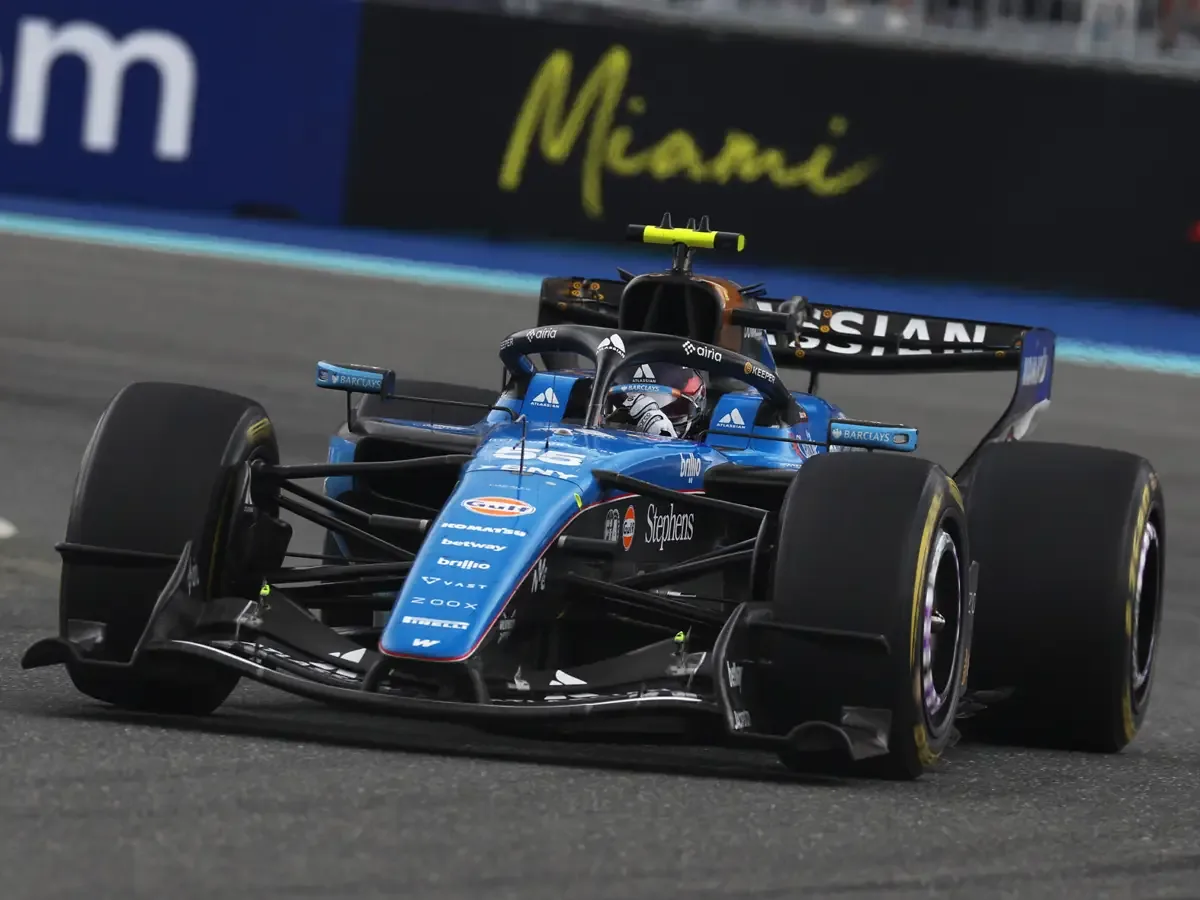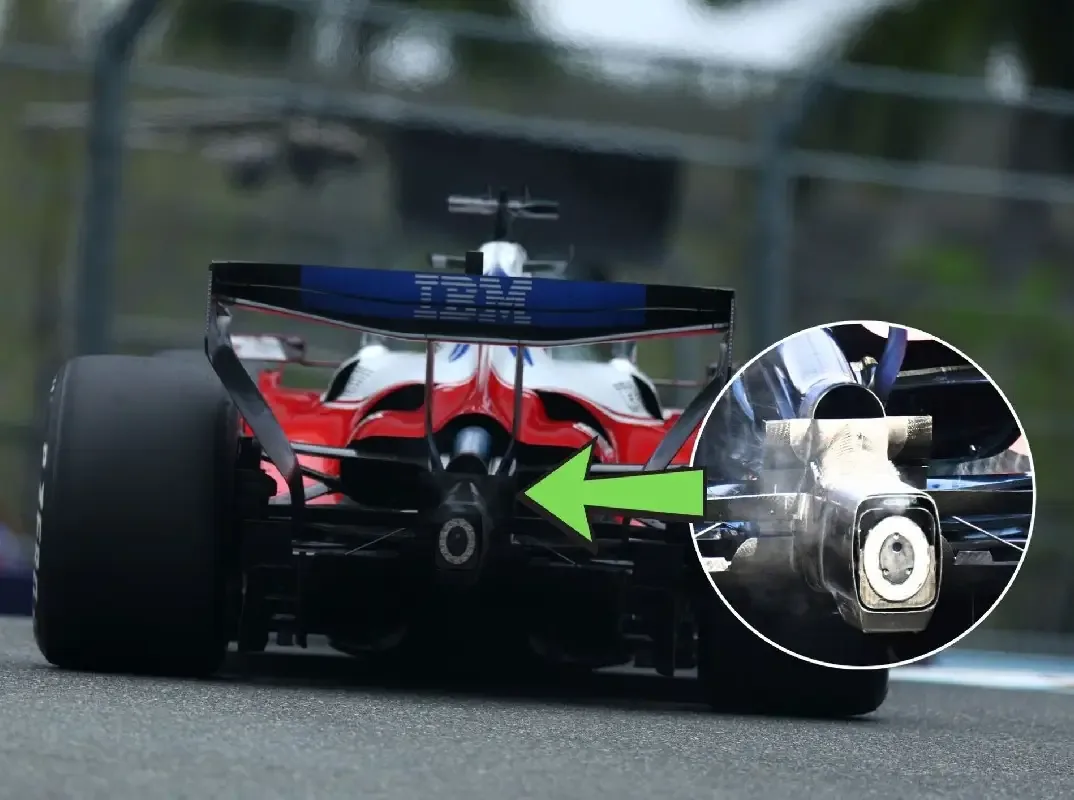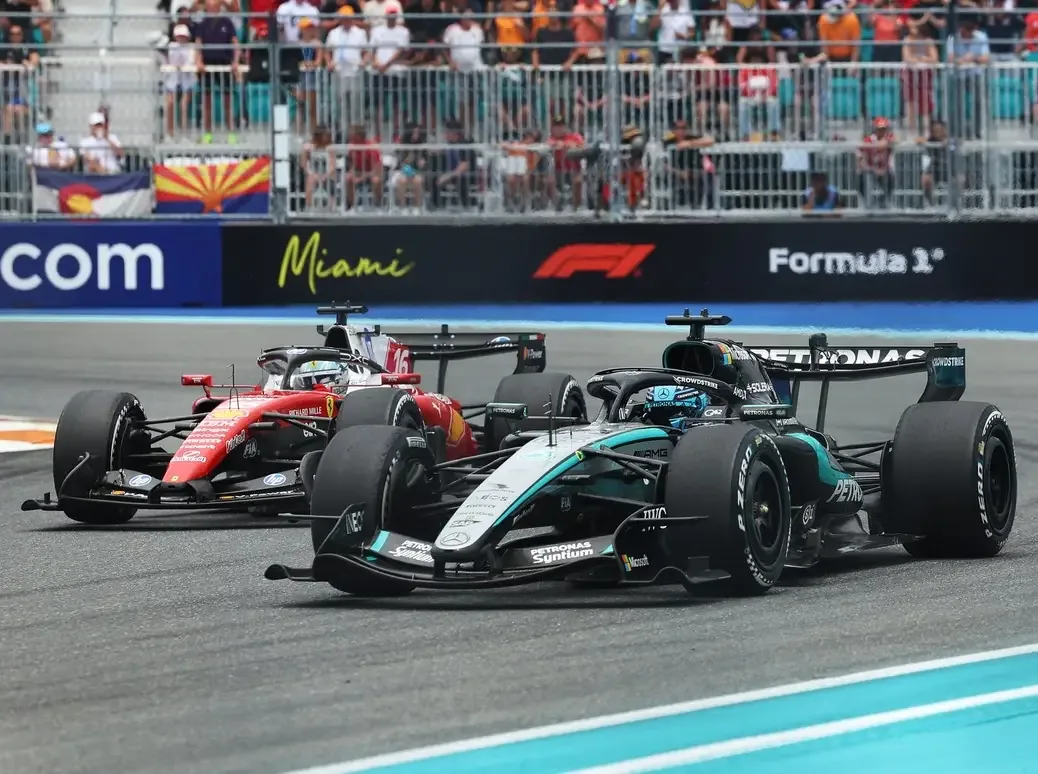
(Motorsport-Total.com) – The new Formula 1 power unit from Red Bull and Ford received praise from some rivals in the first races of 2026. But how did the newcomer manage to start so competitively with the DM01 power unit? And how close are they to Mercedes? Ford Performance Director Mark Rushbrook explains. But first, a brief look back.
During a media session with Dutch journalists in Zandvoort last year, Toto Wolff commented on Red Bull’s engine project. “They have to climb Mount Everest,” said the Mercedes team principal at the time. It sounded like a realistic assessment, which Laurent Mekies fully agreed with.
After the first test runs in 2026, however, very different tones were heard from the paddock: At the winter tests in Bahrain, both Wolff and George Russell suddenly called the Red Bull-Ford power unit the “absolute benchmark.”
These statements were related to the discussion about the compression ratio of the combustion engine and were clearly politically motivated – not without reason did Max Verstappen respond: “Just wait and see how fast Mercedes will be on the straights in Melbourne.” Nevertheless, there is a kernel of truth in it.
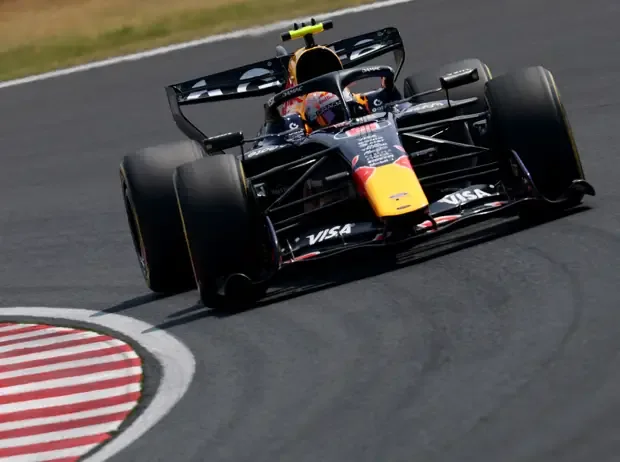
While the start of the season was difficult for Red Bull in terms of chassis, the power unit proved surprisingly competitive for a newcomer.
Why Ford is now more interested in the combustion engine
A brief look back is necessary: The story goes back to 2021 when Honda formally decided to end its Formula 1 project. Later, the Japanese manufacturer reversed this decision – as it had done more than once before. At that time, however, Red Bull had already decided not to be dependent on a single engine supplier any longer and to take matters into their own hands.
Red Bull completed the construction of its power unit factory on the Milton Keynes campus in just 55 weeks. The new facility is located opposite the MK7 building. Later, the factory became known as the Jochen Rindt building.
Anyone entering the facility today – under strict conditions and with camera lenses covered – first arrives at “Brodie’s Boulevard,” named after Steve Brodie, one of the first employees who came from Mercedes in August 2021. In this corridor, Red Bull’s first own V6 combustion engine is also displayed. It was started for the first time in August 2022, just in time for Dietrich Mateschitz to witness it.
Since then, it has been a long journey. Negotiations with Porsche failed, Ford joined as a new partner – after Rushbrook simply sent an email to then team principal Christian Horner – and under the leadership of Ben Hodgkinson, a diverse workforce was built, including more specialists from Mercedes.
The debut of the DM01 – again a tribute to Mateschitz – marks a new chapter in Red Bull’s Formula 1 history. At the same time, it is a special moment for the new partner, as Ford’s motorsport chief Rushbrook explained in an exclusive interview with Motorsport-Total.com:
“We knew what an incredible challenge it would be just to be on the grid with the new power unit. But to be right in the middle of it, as we are currently, definitely feels good.”
While Honda stated before 2026 that it had focused mainly on the electrical components in the first development phase, Red Bull initially placed a somewhat stronger focus on the combustion engine. The goal was to get as much as possible out of tests with a single-cylinder test bench and transfer positive results to a complete V6.
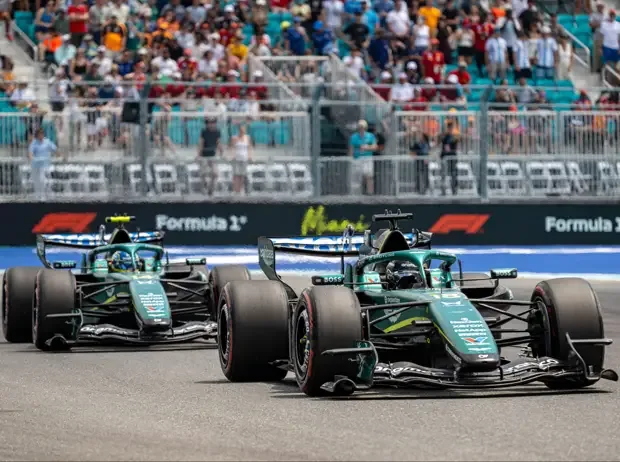
Given the different starting points of both projects, these approaches made sense in the early phase. The current situation, however, mainly shows the advantage of having everything on site. Honda was only able to solve its vibration problems after Aston Martin left one of its AMR26 cars in Sakura following the Japanese Grand Prix. This underlines how difficult such a program is when split between the UK and Japan.
It should also be noted at Red Bull that Ford became more involved in the project than originally agreed and expected. “Originally, it was limited to the electrification area: battery cell, electric motor, inverter, software, and calibration systems,” said Rushbrook.
“But what we did not expect and what was initially not a priority for us was the combustion engine. That changed over the course of the program – especially because our product cycle for road cars has changed.”
He is referring to the fact that Ford has scaled back its original plan to phase out pure combustion road cars.
“The biggest area we did not expect is how much it has helped us with topics like additive manufacturing or modern production,” Rushbrook continued. “The ability to print parts, produce them so quickly, with the necessary quality control, precision, and dimensional accuracy – that has taken us much further than we ever expected. And it was also a huge advantage for other racing programs.”
How competitive is the Red Bull and Ford power unit?
With Ford’s expanded contribution, the state-of-the-art facilities in Milton Keynes – partly sourced from the Austrian company AVL – and expertise from specialists, for example from the Mercedes environment, Red Bull has at least managed to start this cycle with a competitive power unit.
Of course, this power unit is not the clear benchmark as Wolff suggested. Rushbrook can laugh about these statements. He said: “There is the sporting aspect, the technical aspect – and certainly also politics.”
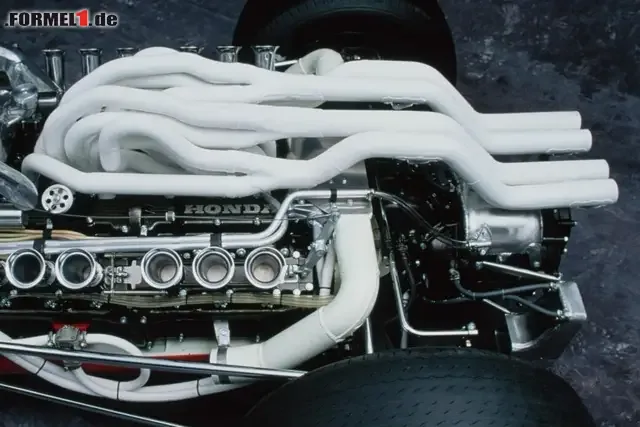
Formula 1 power units from Honda since 1964
Rushbrook himself described the current situation by saying that Red Bull is “in the mix.” At the same time, he found it difficult to fully assess the balance of power on the power unit side – something the FIA must do after the Canadian Grand Prix because of its ADUO system for combustion engines.
Rushbrook emphasizes, however, that the performance balance of the power units changes depending on operating conditions – because the new power units are “sensitive.” “We still have to get a handle on these differences under various conditions,” Rushbrook said.
For outsiders, the influence of conditions is difficult to decipher. Rushbrook emphasizes, however, that the FIA should consider this factor in ADUO decisions in his opinion. This “context” is needed because you “cannot just blindly look at the data,” Rushbrook said.
When asked what Ford means exactly by this “context,” Rushbrook said: “It means the conditions under which we drive on the track. Temperatures, humidity, the environment in which we drive. Because every power unit reacts differently sensitively to these conditions.”
After extensive consultations with all teams and power unit manufacturers, the FIA has decided to keep the procedure for measuring pure ICE performance as simple as possible. ICE stands for “Internal Combustion Engine.”
“The calculation is based on a number of factors, including input shaft torque, engine speed, MGU-K power, and a weighting that considers the impact of power on lap time over measured laps,” explained the world governing body for motorsport.
“From the beginning, it was transparently discussed between the FIA and manufacturers that certain factors that can ultimately influence ICE performance – such as fluid temperatures, external aerodynamics, and similar variables – are recorded as part of the measurements on the car and no correction method is applied.”
Looking at their own data, including the effect of different track conditions, Red Bull and Ford have a clear picture of what still needs to be improved on their own power unit. Understandably, Rushbrook does not want to share this information publicly.
In conclusion, however, he shares Max Verstappen’s assessment that the Mercedes power unit remains the benchmark at the start of the new Formula 1 era. He said with a grin on his face: “Well, the power unit is pretty good!”