(Motorsport-Total.com) – Normally, representative long runs are rather rare on a sprint weekend, but since the first Formula 1 free practice in Miami was extended to 90 minutes due to the changes in the 2026 regulations, this time there was extensive data available – also with a lot of weight in the tank.
Read more Between Team Duel and Harmony: The Truth About McLaren 2025
This allows for much more precise conclusions about the actual balance of power for the sprint as well as the race on Sunday. Since the teams are usually fully fueled in these runs, fuel plays hardly any role as a differentiating factor. Despite the five-week break and the regulation adjustments, the fundamental pecking order seems to have changed little.
The best long runs were completed on average by the two Mercedes drivers. Adjusting the data for different stint lengths and tire compounds, World Championship leader Andrea Kimi Antonelli was on average the fastest driver with a lot of weight on board – but only by a razor-thin margin of 0.03 seconds per lap ahead of teammate George Russell.
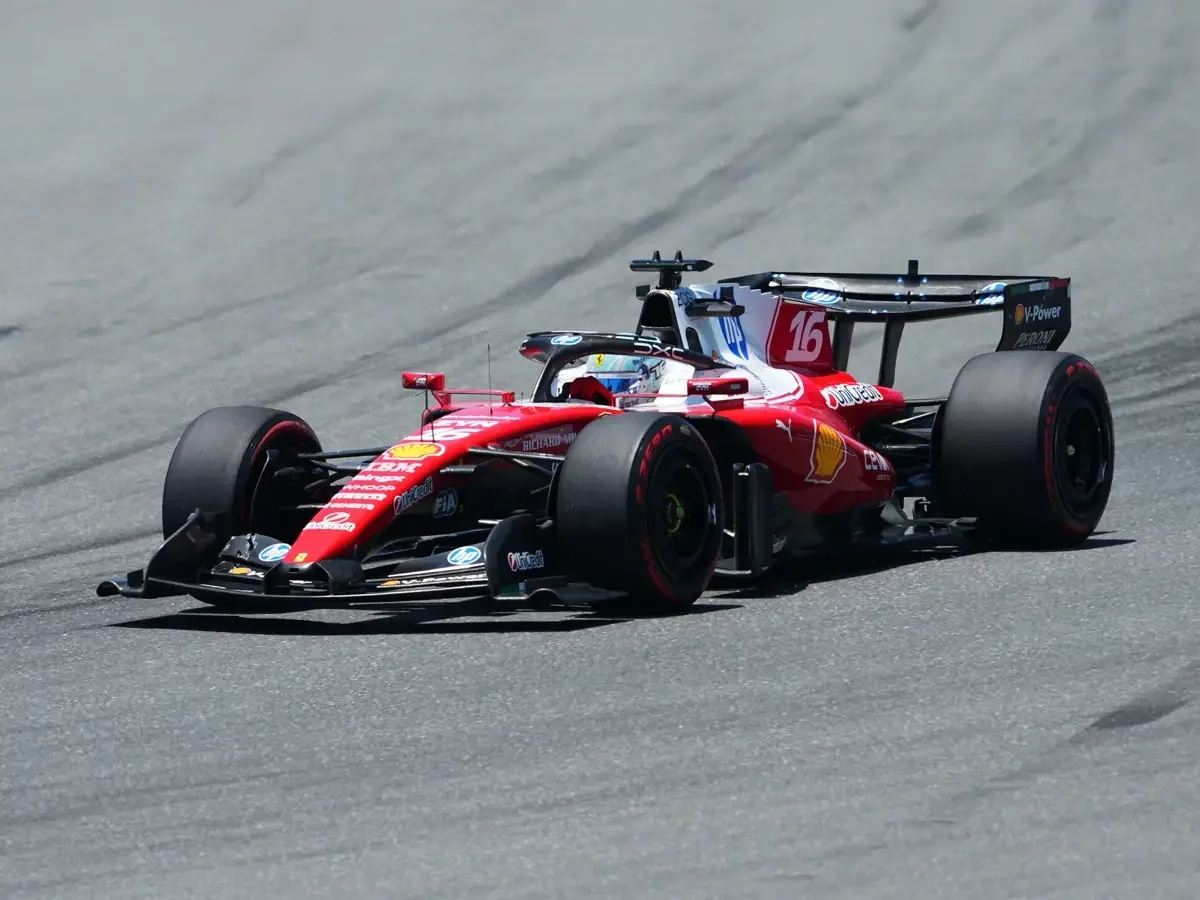
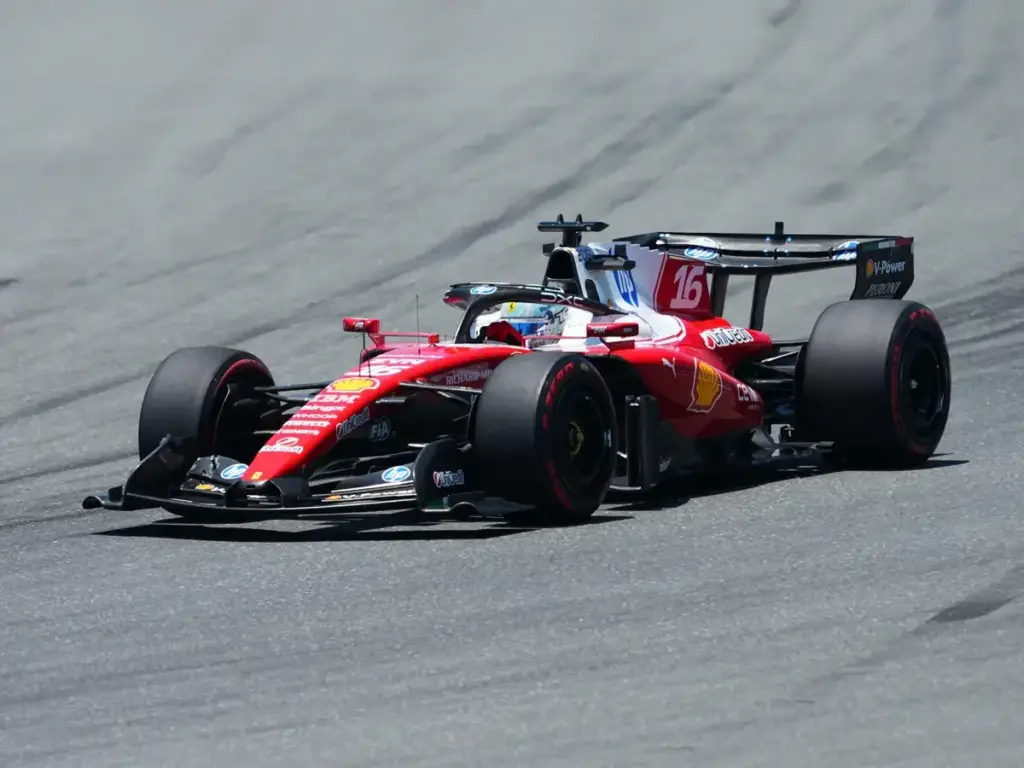
Thus, Mercedes was once again clearly ahead of the rest of the field. Charles Leclerc in the Ferrari was the first pursuer with an average deficit of 0.33 seconds per lap. Teammate Lewis Hamilton took fourth place with a deficit of 0.6 seconds per lap.
Has the competition closed the gap to Mercedes?
Even if the fundamental ranking order seems to have changed little, the chasing teams could have closed the gap to Mercedes. In the first three races of the season, Ferrari was still on average 0.53 seconds per lap behind – so they could have gained about two tenths here.
A look at the sector times shows that Ferrari still has clear strengths in the corners. Both in the first sector with fast and medium-speed sections and in the second sector with very slow corners, the car is convincing. Time is lost mainly in the last sector on the straights.
McLaren presents itself in Miami as the third force in terms of race pace for now, even though the performance seems stronger on a fast lap. In the long run, an average of 0.87 seconds per lap was missing to Mercedes – the previous season average is 0.82 seconds.
The performance picture is similar to that of Ferrari, but at a somewhat lower level. While the first sector with fast corners still works well, McLaren already declines in the second sector. Especially on the straights in the third sector, the reigning world champion team loses a lot of time.
Update Offensive: Has Red Bull fought its way out of the midfield?
With as many as seven updates, Red Bull was one of the teams that made intensive use of the long break. This was also urgently necessary, as the RB22 was previously missing a full 1.26 seconds per lap to Mercedes in race pace. The first impression from Miami suggests that a step forward has been made.
Besides a strong second place in qualifying pace in the first practice, the team also showed solid long runs in the middle of the session on medium tires. Max Verstappen was missing, adjusted for different tire types, 0.88 seconds per lap to Mercedes – an improvement of about four tenths compared to the previous season.
Read more Valtteri Bottas: After Japan, the WhatsApp group of the Formula 1 drivers was buzzing
Red Bull’s great strength remains top speed. No other car was faster in the final sector; Verstappen clearly led the speed measurement with 333 km/h. However, there still seems to be a lack of downforce in the corners, which is particularly noticeable in the first but also in the second sector.
However, teammate Isack Hadjar had problems. The Frenchman only finished ninth, and in the long runs he was missing a full two seconds per lap, placing him in the rear midfield.
Midfield: Alpine and Haas continue to set the tone
Also in the midfield, the balance of power has changed little. The best long run pace was shown by Franco Colapinto in the Alpine (+1.32). Behind him were the two Haas drivers Esteban Ocon (+1.59) and Oliver Bearman (+1.86), who were also able to position themselves in the front midfield.
A positive surprise was delivered by Williams driver Carlos Sainz (+1.51), who was also operating in this region. Nico Hülkenberg in the Audi (+1.85) is also within striking distance of the points positions. Nevertheless, Alpine and Haas are likely still the favorites in the midfield.
Aston Martin did not complete any long runs, while Racing Bull’s race pace was disappointing. Both Liam Lawson (+2.78) and Arvid Lindblad (+3.84) had little to do with the midfield. The two Cadillac drivers Sergio Perez (+4.34) and Valtteri Bottas (+5.32) had a similar fate.
Tires: Red Bull with one less set of Mediums
As usual on sprint weekends, most teams used only one set of hard tires and one set of softs for qualifying simulations at the end of the session. Of the top teams, only Red Bull additionally used a set of mediums, which will be missing for the rest of the weekend.
The medium tire plays a central role on sprint weekends: it is usually used in SQ1 and SQ2, comes into play in the sprint race, and also in one stint of the main race on Sunday. Ideally, teams want to save all four available medium sets for the decisive sessions – however, Red Bull chose a different approach here.
Tire wear is unlikely to play a decisive role, by the way. On the one hand, the weather situation for Sunday is still unclear; on the other hand, the Miami International Autodrome traditionally shows low degradation. Everything therefore points to a clear one-stop strategy in dry conditions.
Read more No chance for Ferrari? Charles Leclerc skeptical before Miami