(Motorsport-Total.com) – Since the takeover by Liberty Media, Formula 1 has completely changed. Although the series was already a million-dollar product with a strong focus on glitter and glamour under Bernie Ecclestone, since the series has been in the hands of the Americans, all of that has been greatly intensified.
Read more Formula 1 Disney helmet fetches record sum of 175,000 euros

Formula 1 is booming. Spectator numbers at the track are exploding, as are the number of races and the wallets of the teams and their owners – all thanks to Liberty Media’s new approach, which has opened up Formula 1 to the outside world.
“Bernie was extremely strict in business, very restrictive. Liberty has completely opened the commercial side,” explains Alpine’s executive advisor Flavio Briatore, who has experienced both eras of Formula 1, to The Race.
While Ecclestone never had a sense for social media and such things and Formula 1 fell somewhat behind in this regard, fans get the full range with Liberty Media.
“I think with Bernie it was simply a different time. The world moves much faster today,” says Briatore. “Also, many of the new sponsors enjoy Formula 1 – big sponsors who support the event, and so on.”
“And at some point – for whatever reason, whether because of Drive to Survive, the organization, the commercial orientation, or the marketing of Formula 1 – it suddenly became ‘the place to be’ for everyone. And if something is the place to be, everyone wants to go there.”
Speaking of “Drive to Survive”: For many, the Netflix series was the foundation for the current success of Formula 1. The documentary opened up a completely new fan base – and with them many business opportunities.
“Drive to Survive was the key,” nods Briatore. “Before Drive to Survive, we survived. And after Drive to Survive, we survive much better.”
Read more Switch to Williams? Cadillac denies Sergio Perez rumors
Finally success in the USA as well
And Liberty Media has achieved what never succeeded under Ecclestone: gaining a foothold in the USA. “For us, it was impossible back then to hold races in the USA. Bernie tried. We had that one stupid race in Phoenix with zero spectators,” the Alpine boss continues.
“Then we also had the one in Indianapolis with huge problems. We didn’t really race there because of the story between Bridgestone and Michelin and so on.”
New Formula 1 tracks since 2000
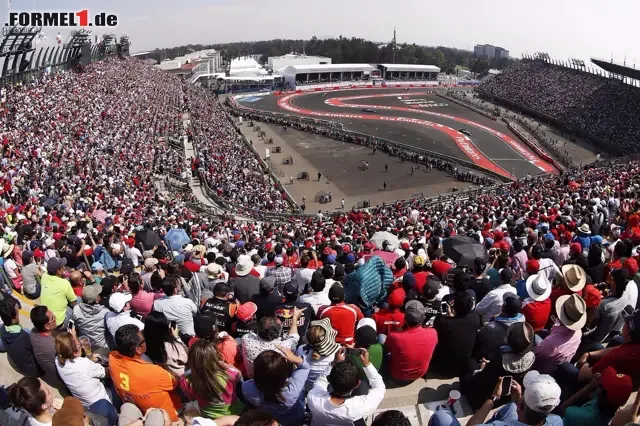
It looks different today: “Today you go to America, you go to Miami – 500,000 people. You go to Austin: sold out. You go to Vegas. You see how extremely Formula 1 has changed. Every race is sold out, completely sold out – rain or shine.”
Although Briatore admits that the calendar, now with 24 races, has become extremely full, “but it’s also nice, because no matter which race you come to: it’s overbooked, it’s packed, you see the enthusiasm of the people. And that is the new Formula 1.”
Team values explode
The “extremely high” importance of the series has of course also ensured that teams now generate almost utopian sums and that it has become difficult to even start a new racing team, as the hurdles including the new dilution fee have also become extremely high.
“I sold my shares in Benetton back then, the total value of the team was 80 million dollars,” says Briatore. “Today, people talk about 3.5 or 4 billion dollars. And all the financiers you talk to predict: In three, four years a Formula 1 team will be worth 10 billion dollars.”
At least Briatore does not seem to believe the latter, as he says: “If that were my team, I would have sold it long ago!”
Read more This is how Mercedes protected Kimi Antonelli in his first Formula 1 year